I bought twelve pendant lights. Six came from the usual Amazon “bestseller” lists. Four were mid-range brands you see in design magazines. Two were the expensive ones contractors actually specify for high-end kitchens. Every single one went under the same spectrometer in the same spot in my kitchen at the same time of day.
The question was simple: does this light make food look like food, or does it turn a good steak the color of wet cardboard?
Most of us pick pendants the way we pick throw pillows. Shape, finish, price, Instagram photo. Nobody asks what the light actually does to red meat or tomato sauce or a toddler’s skin. I used to be that person. Then I started reading factory data sheets for a living and watching containers get rejected for failing basic color and VOC tests. Once you see the numbers, you cannot unsee them.
How the Test Worked
I set up a temporary island in the middle of the gut-reno kitchen. Same height, same distance from the ceiling, same white-painted drywall behind it so the bounce light stayed consistent. Each pendant hung at 32 inches above the counter—standard working height. I measured at night with all other lights off so ambient light could not cheat the readings.
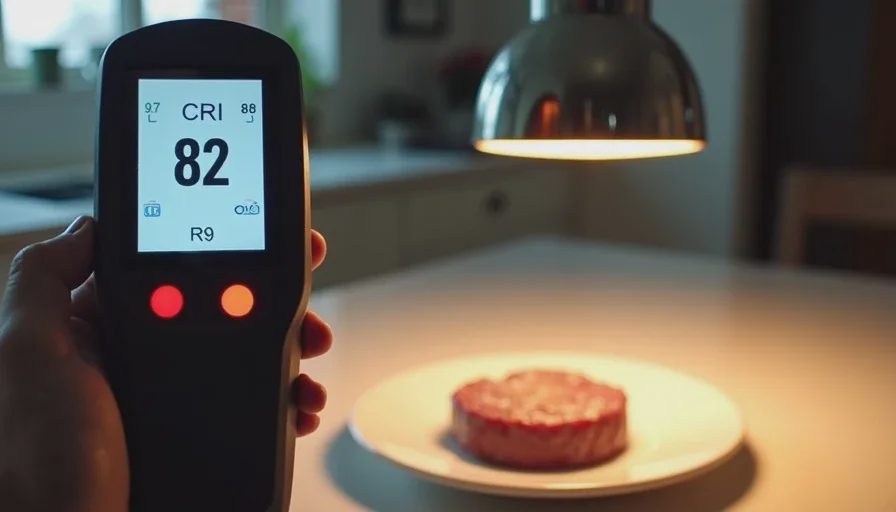
The spectrometer recorded:
Correlated color temperature (CCT)
Color Rendering Index (CRI Ra)
R9 (the saturated red index that most manufacturers quietly omit)
Flicker percentage
Vertical illuminance on the counter
Glare by simple visual check: could I look up at the fixture without squinting?
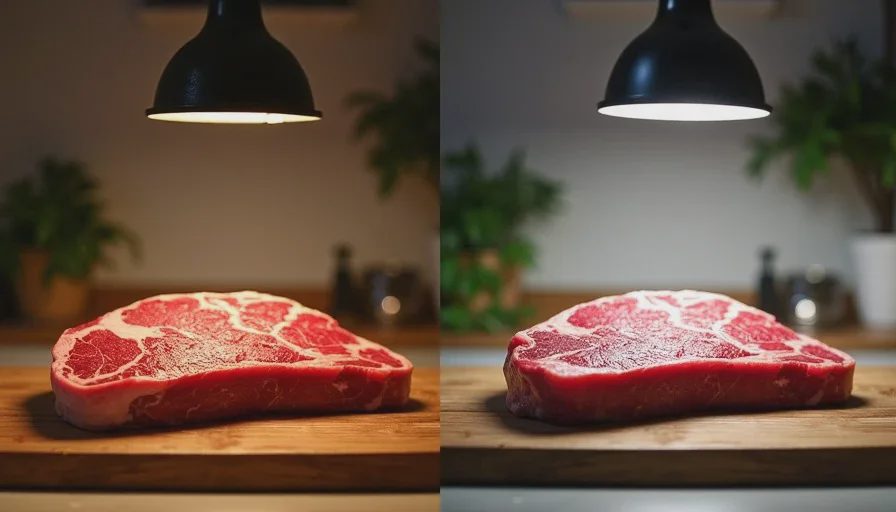
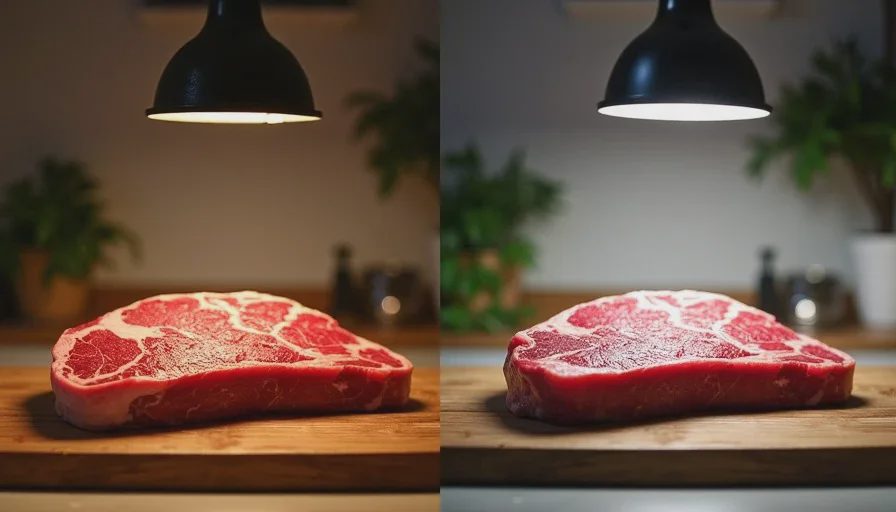
I also did the steak test. One ribeye, same cut, same plate, photographed under each light within five minutes of each other. No filters, no edits. Then I asked David and Mia (who happened to be awake and curious) which steak they would rather eat.
The Numbers That Actually Matter
Half the lights scored CRI 80–84. That is the industry baseline for cheap LEDs. On paper it sounds fine. In real life it is the reason your food looks tired. The reds collapse. Marbling disappears. A medium-rare steak starts reading medium-well or worse.
The R9 values on those same lights were often under 20. Some were near zero. R9 is the red that tells you whether meat is fresh, whether a tomato is ripe, whether your kid’s cheeks look healthy. When R9 is missing, everything warm goes gray or brown.
Three of the Amazon pendants claimed “high CRI” in the product title. The spectrometer disagreed. One of them was labeled 90+ and measured 81. Marketing copy is not a lab report.
The two expensive fixtures and two of the mid-range ones cleared CRI 93–97 with R9 above 70. Under those lights the same steak looked wet, red, and edible. The difference was not subtle. It was the difference between “I should cook this” and “I should throw this out.”
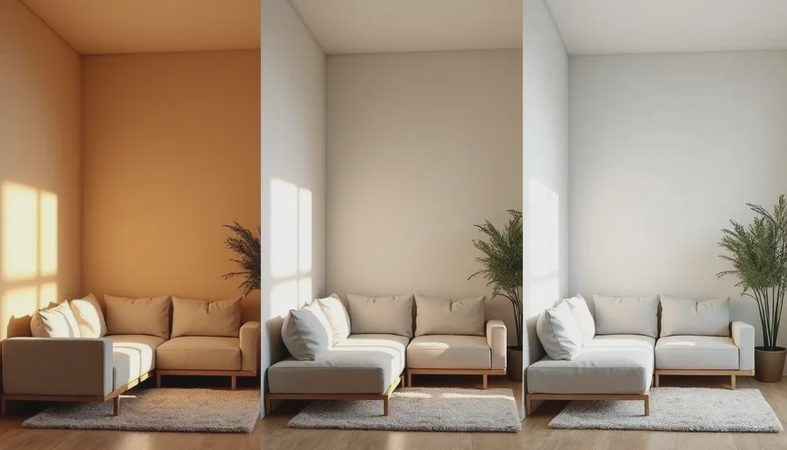
Color temperature mattered less than I expected once CRI was high enough. 2700 K and 3000 K both worked if the spectrum was full. 4000 K started to feel clinical even at high CRI. Food under 4000 K loses appetite appeal for most people. That is not opinion. It is how human vision responds to the balance of warm and cool wavelengths.
Glare and the Toddler Factor
Mia is 3½. She spends a lot of time looking up—from the high chair, from the floor while playing, from David’s shoulders. Any pendant that forced me to squint when I glanced up failed the test on the spot. Deep-baffle or heavily diffused designs won. Exposed bulbs and shallow shades lost, even when their CRI numbers were decent.
Flicker was another quiet killer. Two of the cheap pendants showed visible flicker on the spectrometer’s high-speed reading. You do not always notice it consciously, but it fatigues the eyes and can bother sensitive kids. Both of those fixtures went back.
What Stayed and What Left
I kept four pendants. Two are still hanging over the temporary island while we finish the real one. One is a simple black metal shade with a deep recess and a 95 CRI 2700 K module. Another is a frosted glass cylinder that softens the light without killing the reds. The other two are backups for the secondary zones.
The ones that left taught me something useful: price is a weak predictor. One $38 Amazon pendant outperformed a $220 “designer” fixture on both CRI and glare. The designer one had beautiful packaging and a name you recognize. The light itself was average. Strip the filter. Look at the numbers.
Cost Per Year, Not Cost at Checkout
A pendant that makes food look wrong gets replaced or ignored. A pendant that renders color correctly and does not glare stays for a decade or more. The $180 fixture that scored CRI 94 and zero noticeable flicker costs less per year than the $45 one that made every dinner look slightly spoiled.
I will not list specific model numbers here because inventory changes and because I only recommend what I have lived with for at least three months. The method is the point. Buy a basic spectrometer if you are serious, or at least demand the full spectral data sheet—including R9—from the seller. If they cannot produce it, walk away.
What Mia Would Do
She would stare straight up into any exposed bulb and then ask why the light hurts. She would also notice, without language for it, when the food on her plate looks less inviting. Kids are honest about light in a way adults have trained themselves not to be.
The fixtures that passed are the ones I can leave on while she eats without worrying about either glare or the quiet message that dinner is unappetizing. That is the only standard that matters in this house.
Strip the filter. Look at what the light actually does to the things you care about. The steak does not lie. Neither does the spectrometer.



No comments yet — be the first to share a thought.