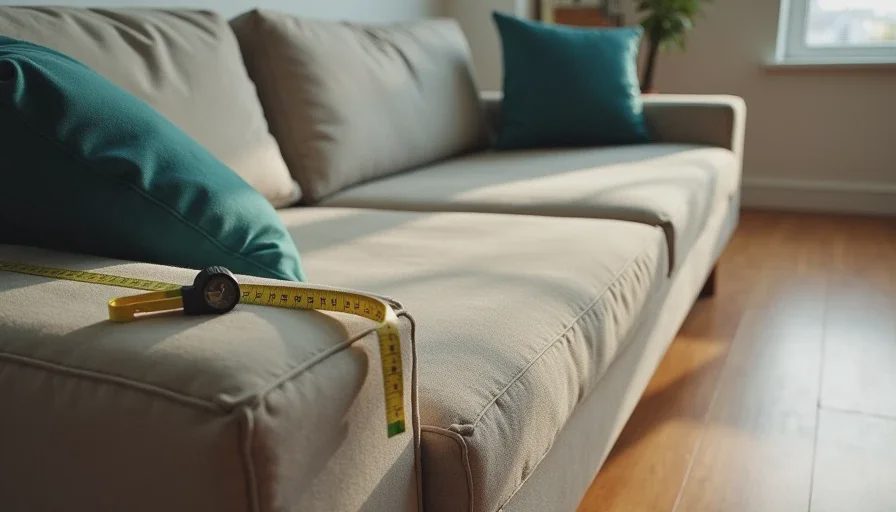
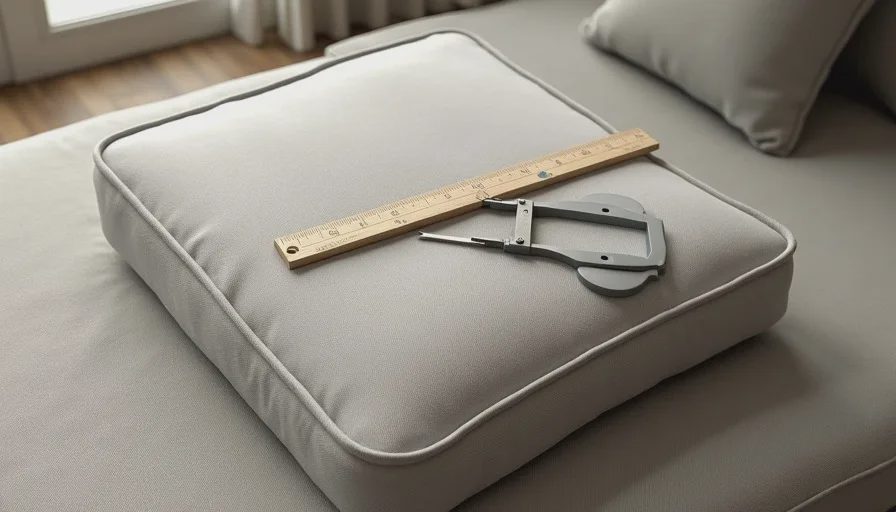
I measure seat depth the same way every time. Front edge of the seat cushion to the front face of the back cushion, tape pulled tight, no compression. I also record overall depth, seat height from floor to top of uncompressed cushion, and backrest height from seat to top of the back. Then I sit.
I am 5'4". My husband is 6'1". Our living room currently holds five different sofas that have rotated through for testing. The rest of the data comes from showrooms, friends’ houses, and returns that sat in the garage for a few weeks before I sent them back. Every number below is measured, not pulled from a product page.
What the numbers actually mean
Standard industry seat depth sits between 21 and 24 inches. Anything under 21 inches starts to feel upright. Past 24 inches you are in lounge territory. For someone under 5'6", the usable range is narrower. If the seat is deeper than your thigh length minus about an inch, one of two things happens: your feet leave the floor and your lower back loses contact with the cushion, or you perch on the front edge and the backrest becomes decoration.
I measured my own buttock-to-popliteal length (back of the buttocks to the crook of the knee) at 19.5 inches. Subtract 1–1.5 inches for comfort and you land around 18–18.5 inches of ideal upright seat depth. For lounging I can go to 21 inches if the back cushions are soft enough that I can add a lumbar pillow without feeling like I am falling backward.
Most sofas ignore that math.
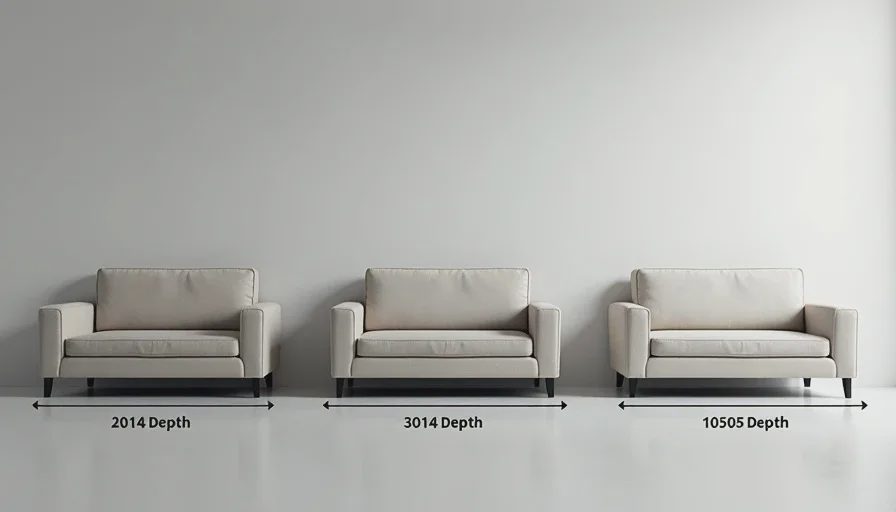
The 15 sofas
I listed them by measured seat depth, shallowest to deepest. Prices are approximate street prices at the time of testing. All were adult sofas, not apartment-scale or kids’ pieces.
Article Sven – 21.5" seat depth, 18" seat height, 33" overall depth. Firm foam. Cross-legged sit worked. Feet flat. Lumbar contact solid. Side-lying required a pillow under the hip. Good daily sofa for upright work and reading.
IKEA Kivik – 23.6" seat depth, 17.7" seat height. Deeper than the number suggests because the back cushions are soft and compress. Upright sit left a small gap behind my knees. Cross-legged was fine. I kept a firm lumbar pillow on it.
Burrow Nomad – 22" seat depth, firm layered foam. Clean upright posture. Feet flat. The back height is low, so head support is minimal if you are tall, but for me it was adequate.
West Elm Harmony (standard depth version) – 22" seat depth. Soft back pillows. I could sit fully back with feet on the floor. Lounging required tucking one leg.
Pottery Barn York – 24" seat depth. Classic American deep seat. Upright sit forced me forward. Cross-legged worked if I used both back pillows. Side-lying was comfortable. This is the depth most “comfortable” reviews celebrate and the depth that leaves shorter women dangling.
Crate & Barrel Unwind – 28.7" seat depth. Extreme lounge. My feet never touched the floor in any upright position. Excellent for sprawling. Terrible for anyone who wants to sit and talk for more than ten minutes without shifting.
Joybird Bryant – 26" seat depth. Soft fill. Same problem as the Unwind but slightly less extreme. I could side-lie comfortably. Upright required a thick lumbar pillow and still felt like I was sliding.
Sundays Movie Night – 26" seat depth. Feather-fiber blend. Cloud-like. Same issue. Great if the primary use is movie nights and napping. Not a daily upright sofa for under 5'6".
RH Cloud – 25" seat depth. Ultra soft. Same category. Beautiful sink-in feel that disappears the moment you try to sit with feet on the floor and spine supported.
Article Abisko sectional – seat depth around 24–25" depending on configuration. Soft enough that I could add a pillow and reclaim some depth, but the default is still too deep for upright work.
West Elm Haven – roughly 25–26" effective. Marketed as deep and cozy. Accurate.
A mid-market “Scandinavian” sofa from a big-box retailer – 23" on the tag, measured 24.5" once the thin back cushion compressed. Classic trap.
A custom order from a local upholsterer – 20.5" seat depth, firm foam, 19" seat height. Best upright sit of the group. Cross-legged still worked. Side-lying needed a throw pillow. This is the range I now specify when I order anything for our house.
An older mid-century piece we found at an estate sale – 19.5" seat depth. Firm. Perfect upright posture. Slightly short for full thigh support on longer sits, but feet flat and back contact excellent.
A modern modular system advertised as “deep lounge” – 27" seat depth. Returned after two weeks. Mia could climb on it and still not reach the back cushion when sitting normally.
Patterns that kept repeating
The majority of sofas currently sold as “comfortable” or “lounge” sit between 24 and 28 inches of seat depth. That range works for bodies over roughly 5'10". For anyone shorter, the sofa forces a choice between unsupported lower back or dangling feet. Neither is sustainable for multi-hour use.
Seat height compounds the problem. Most of these pieces land at 17–19 inches. Combined with deep seats, the result is a posture that rounds the lumbar spine. I felt it after forty-five minutes on the deeper models. David, at 6'1", did not.
Back cushion height and firmness matter as much as the depth number. Soft, thick back pillows let you reclaim 1–2 inches of usable depth by placing a firm lumbar pillow behind you. Firm, thin backs do not give that option. The Article Sven and the custom 20.5" piece both had firm enough backs that the measured depth was the depth I actually experienced.
How I test now
I no longer trust product pages. I ask for the seat depth measured the same way I do it, or I measure myself. I sit for at least twenty minutes in three positions: upright with feet flat, cross-legged, and side-lying with a book. I check whether my lower back stays in contact without a pillow. I check whether my feet stay on the floor without sliding forward. I check whether Mia can climb up and sit without the seat swallowing her.
Cost-per-year still applies. A $4,500 sofa that forces bad posture for a 5'4" primary user is not a better investment than a $1,800 sofa with a 21-inch seat that actually gets used every day without lumbar pillows.
The five that worked for me without constant adjustment were the Article Sven, Burrow Nomad, West Elm Harmony standard, the custom 20.5", and the estate-sale mid-century. Everything deeper required workarounds or was better classified as a lounger than a daily sofa.
If you are under 5'6", start with the seat depth number, not the overall depth, not the style name, and not the “most comfortable” headline. Measure your own thigh length. Subtract an inch. That is your upright target. Anything more than two inches past that target is a lounge piece, not a sit-and-talk piece. The industry still designs primarily for the taller end of the population. The data does not lie about it.



No comments yet — be the first to share a thought.