Affordable kids furniture is not automatically flimsy, and expensive furniture is not automatically safe. I learned that lesson in purchasing departments, long before Mia started using every chair as a climbing frame. When I test a piece, I ask the unglamorous questions first: Would Mia lick the finish? Can she pinch a finger in the hinge? What happens when applesauce dries in the joint? Then I look at style and color.
The goal is furniture that handles three years of sticky hands, six years of homework, and at least one move without becoming landfill. A reasonable budget for a toddler table and two chairs is often $100 to $250. A simple twin bed frame can run $150 to $500, while a solid dresser commonly lands between $250 and $700. Those ranges are broad, but they are more useful than an influencer's perfectly staged room with no dimensions or material details.
Start With Materials, Not the Finish
The safest affordable kids furniture usually has a boring material story. Solid pine, rubberwood, birch plywood, and properly sealed hardwood are practical places to start. They can still dent, but they are easier to inspect and repair than thin fiberboard covered in a peeling printed film. A painted surface should feel continuous around edges and corners, not rough where a child can pick at it.
Engineered wood is not automatically bad. Medium-density fiberboard can make a stable, affordable bookshelf or dresser when it is thick enough, sealed on all sides, and joined with real hardware. I look for panels around three-quarter inch thick on load-bearing pieces, metal cam fittings that sit flush, and a back panel secured firmly rather than held in place by a few staples. Particleboard at the very low end often swells after one cup of spilled water, so it is a poor choice for a playroom floor.
Ask about the finish and emissions, too. Look for compliance with applicable federal children's product rules and finishes described as low-VOC or water-based. A label alone does not prove excellent construction, but it gives you a starting point. Open flat-packed furniture in a ventilated room, wipe it down, and let the smell fade before a child sleeps beside it.
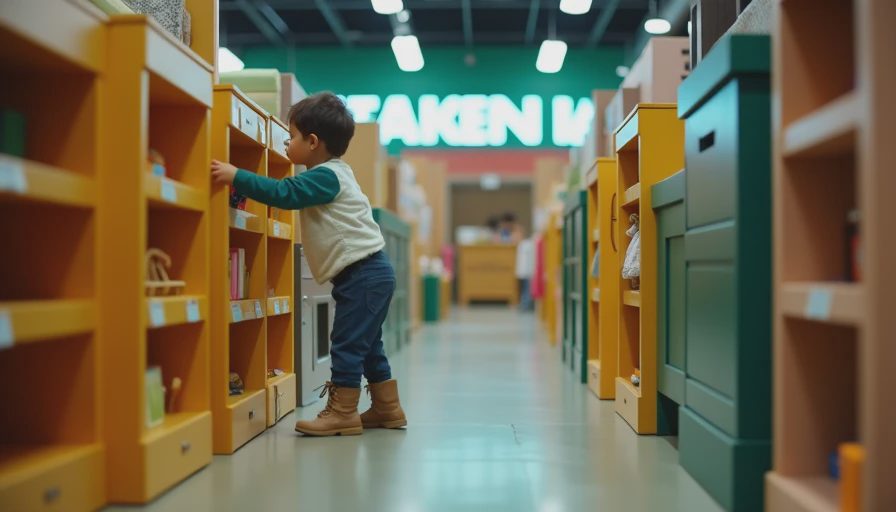
The Mia Test: Tip, Pinch, Bump, Spill
Affordable kids furniture has to pass more than a visual inspection. I put my weight against tables and chairs from several directions, then examine the fasteners after assembly. A small table should not walk across the floor when a child pushes against it. A chair should have a broad enough footprint that leaning back does not turn it into a seesaw.
For dressers and bookcases, anchoring is not optional. Tall furniture can tip when a child climbs a drawer or reaches for a toy. Use the supplied anti-tip hardware, attach it to a wall stud when possible, and replace a flimsy strap with a properly rated kit if the original hardware feels decorative. Drawers should stop before pulling completely out, and gaps around drawer fronts should be even. Uneven gaps often signal poor assembly or a warped panel.
Edges matter more than parents expect. A sharp square corner at forehead height is a hard no in my house. Rounded corners are better, but they should be part of the actual construction rather than a thin plastic cap that can be peeled away. Check for exposed screw heads, splinters, loose knobs, and openings that could catch a small finger. Mia's favorite stress test is running into furniture while carrying a stuffed animal, so I leave clear walking space around every piece.
Where to Spend and Where to Save
Affordable kids furniture works best when you spend money on structure and save money on decoration. A solid bed frame with a plain finish can outlast three themed replacements. You can add personality with washable bedding, removable decals, a colorful lamp, or a low-cost rug that can be replaced after a craft-project disaster.
Save on a small reading table if it has stable legs and a replaceable surface. Spend more on a dresser that will hold clothing daily, because drawer slides and joinery determine whether it still works in five years. IKEA, Target, Walmart, and local resale stores all carry pieces across this range, but the retailer name tells you less than the specification sheet. A $180 dresser with thin backs and weak slides may be a worse purchase than a $280 model with thicker panels and metal runners.
Here is my cost-per-year check. A $300 bed frame used for eight years costs about $37.50 per year. A $140 frame replaced after two years costs $70 per year, before counting delivery, disposal, and the hour spent assembling another one. Stop staring at the price tag. Divide it by the years you will use it.
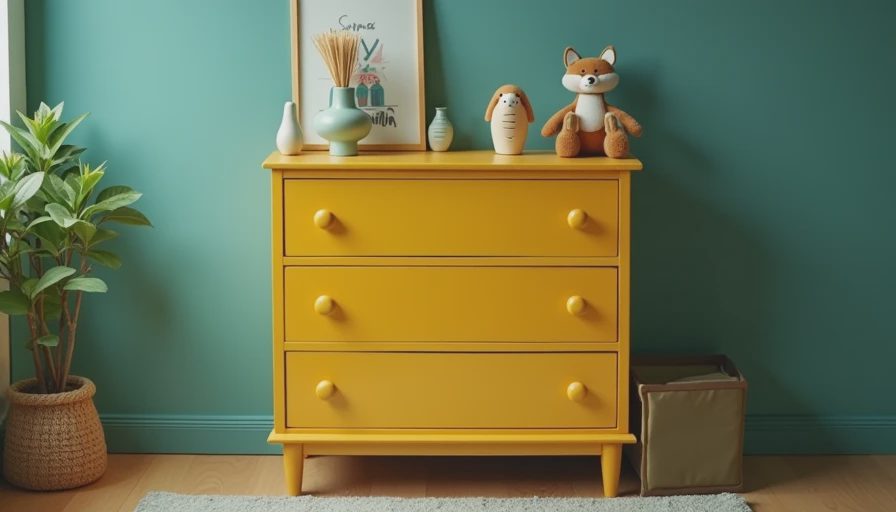
Secondhand Can Be a Smart Buy
Used furniture can make affordable kids furniture genuinely affordable, but I inspect it more aggressively than a new piece. Look underneath for water damage, swollen edges, insect evidence, missing hardware, and repairs hidden with paint. Smell the drawers and cabinet interior. A persistent musty or chemical odor is reason to walk away, especially for a crib, mattress platform, or piece that will sit in a nursery.
Avoid recalled products by searching the model name and manufacturer before buying. Cribs and other sleep products deserve particular caution because missing instructions, modified rails, and unknown parts create risks that a fresh coat of paint cannot fix. I am comfortable buying a sturdy used bookshelf or hardwood table after inspection; I am far more selective with anything used for sleep or anything that depends on an exact safety configuration.
Measure before bringing a bargain home. Write down the doorway width, stair turns, wall length, and the clearance needed for drawers to open. A cheap dresser that blocks a bedroom door is not a bargain. For resale listings, ask for photos of the underside, hardware, manufacturer label, and any damage before driving across town.
A Practical Buying Routine
For affordable kids furniture, I use a simple four-part routine. First, measure the room and mark the footprint with painter's tape. Second, read the assembly manual before checkout; unclear diagrams often predict a frustrating build. Third, inspect materials, fasteners, finish, and edge treatment. Fourth, plan the anchoring and cleaning routine before the box arrives.
Once assembled, tighten every connection after a week of use. Flat-packed parts can settle, and a chair that felt solid on day one can develop a wobble. Keep the extra hardware and instructions in a labeled bag. If a drawer starts sticking, fix it immediately instead of letting a child force it open. A silicone mat under a craft table, washable covers on a reading cushion, and felt pads under chair legs prevent surprisingly expensive damage.
My final filter is simple: can this piece handle a spill, a bump, and a future room change without making me nervous? If yes, the purchase earns its place. If the entire sales pitch depends on a trendy color, a tiny discount, or a photograph with no dimensions, keep scrolling. The best affordable kids furniture is sturdy enough to disappear into daily life, safe enough to survive close inspection, and plain enough that your child can make the room their own.


No comments yet — be the first to share a thought.