
Most children’s furniture is sold with an expiration date built in. The crib is cute for eighteen months. The toddler bed lasts until the child is four. The twin “race car” or canopy bed becomes embarrassing at ten. By fifteen the room needs a full reset. That cycle is expensive, wasteful, and usually unnecessary.
I started tracking the problem when Mia outgrew her first sleep space. We are still in the middle of a gut renovation, so every piece that enters the house has to earn its floor space for years, not months. I looked at construction, finish durability, safety under real climbing loads, and whether the design would still make sense when she is a teenager who wants the room to feel like hers instead of a leftover nursery.
Why most pieces fail early
The failures cluster around three points.
First, materials. A large share of mass-market kids’ furniture uses particleboard or MDF with thin laminate or paper edge banding. These boards swell with humidity, chip at the corners, and lose screw holding power after a few seasons of assembly and disassembly. Drawer bottoms sag. Rails loosen. The piece looks tired long before the child outgrows the size.
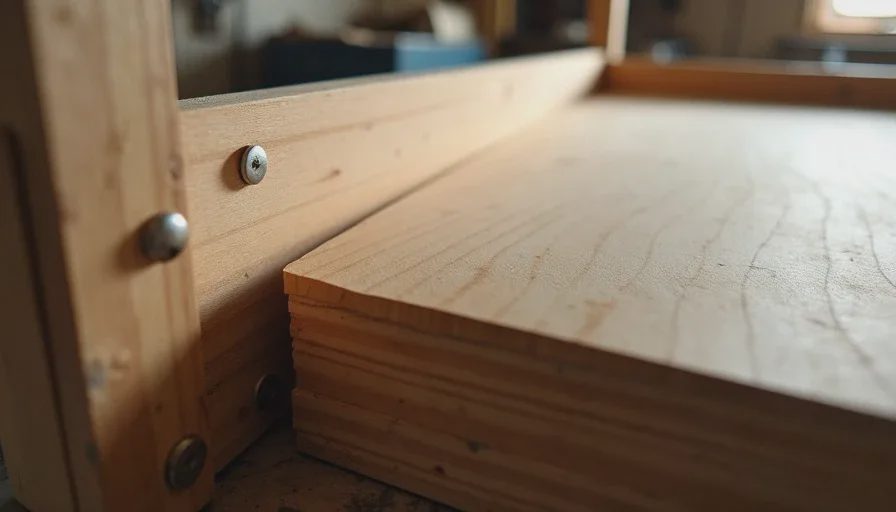
Second, joinery and hardware. Cam locks and confirmat screws that work for a light toddler bed do not survive a ten-year-old who uses the frame as a launch pad. Metal-to-wood connections that rely on particleboard threads strip. Glue joints in low-cost frames separate under repeated side loads.
Third, style that cannot age. Bright primary colors, cartoon motifs, and exaggerated proportions lock the piece into a narrow age window. Even if the structure holds, the visual language forces a replacement.
Safety adds another layer. Clothing storage units taller than 27 inches, heavier than 30 pounds, and with more than 3.2 cubic feet of storage volume now fall under the mandatory ASTM F2057-23 standard. The tests simulate a loaded unit on carpet with a 60-pound force applied to an open drawer. Many older or cheap dressers still on the market were never designed to pass that test. Tip-over anchors help, but they are not a substitute for inherent stability.
What actually lasts
The pieces that survive from age two to fifteen share a short list of traits.
Solid wood or high-quality plywood with real wood veneer holds screws and resists impact better than particleboard. Pine, birch, maple, and oak all appear in durable lines. The finish matters as much as the substrate. Water-based, low-VOC topcoats that can be lightly sanded and recoated extend the life of the surface when crayon, marker, or impact damage appears.
Simple, rectilinear forms age better than themed shapes. A clean platform bed or a basic four-drawer dresser can move from a toddler room to a teen room with only a change of bedding and hardware. Convertible systems that keep the same core frame and swap rails or footboards reduce the number of full replacements.
Hardware that can be tightened or replaced is essential. Bolted connections, metal corner brackets, and full-extension drawer glides that accept replacement slides keep the piece functional when parts wear.
I measured and lived with several categories.
Beds
Convertible cribs that become toddler beds and then full-size frames are the clearest long-term value when the conversion kits are well engineered. The frame stays. Only the side rails and sometimes the footboard change. Solid pine or hardwood versions with proper metal hardware have held up under the weight of both a climbing toddler and an adult sitting on the edge. The cost-per-year drops sharply once the same structure reaches age ten or twelve.
Fixed twin or full platform beds made from solid wood with a center support and metal-to-wood bolted joints also work. I look for a frame that accepts a standard mattress size so the only future purchase is a new mattress, not a new bed. Low-profile designs without elaborate headboards avoid the “this looks like a little kid’s bed” problem later.
Bunk and loft systems can serve two children or free floor space, but they introduce extra failure points at the ladder and guardrail connections. Only versions with through-bolted hardware and clear weight ratings stay on my list.
Storage
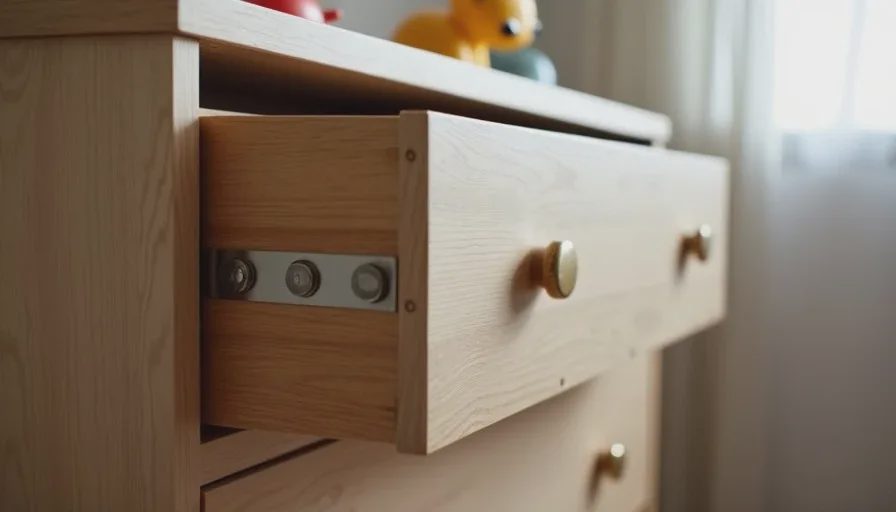
Dressers and chests are the highest tip-over risk category. I now require that any unit over the ASTM height and volume thresholds either carries current compliance documentation or is anchored with a properly rated restraint into wall studs. Beyond the standard, I check drawer construction. Dovetail or solid wood drawer boxes with full-extension ball-bearing slides outlast stapled particleboard boxes with plastic rollers.
A dresser that starts life as a changing table (with a removable top tray) and later becomes pure clothing storage is more useful than a single-purpose nursery piece. Neutral finishes and simple pulls let the same unit move into a teen room without looking out of place.
Bookcases and open shelving need the same tip-over attention. Anchoring is non-negotiable once the unit is tall enough for a child to climb.
Seating and desks
Toddler chairs and activity tables rarely survive into school age because the proportions are fixed. I prefer adult-scale or adjustable pieces from the start when possible. A simple solid-wood stool or a small bench can serve as a toddler seat, a step stool, and later a side table. Desks that allow height adjustment or that start at a usable school-age height avoid the need for a second purchase at age eight.
Real-use observations from our house
Mia treats furniture as climbing equipment, a drawing surface, and occasional impact testing. Soft edges and rounded corners reduce injury risk and also reduce the visible damage that forces early replacement. Finishes that can be cleaned with a damp cloth and mild soap survive better than delicate paints that show every mark.
Weight capacity ratings are often optimistic. I treat the published number as a maximum static load and assume dynamic loads from jumping or climbing will be higher. Frames that feel rigid when empty and still feel rigid with an adult sitting on the edge are the ones that stay.
Cost-per-year remains the clearest metric. A $600 solid-wood convertible system used for twelve years costs $50 per year. Three successive $250 beds over the same period cost more and generate more waste. The higher upfront piece also tends to have better resale or hand-me-down value if the family no longer needs it.
What I will not buy again
Anything that relies primarily on particleboard for structural members. Anything with themed plastic panels that cannot be removed. Anything that fails a basic tip test even with the anchor installed. Anything whose finish cannot be maintained or lightly refinished. Anything that only works for a two-year age window.
The goal is not to buy “kids’ furniture.” The goal is to buy furniture that happens to be safe and appropriately scaled for a child and that continues to function when that child is no longer small. Solid materials, honest joinery, neutral design, and attention to tip-over physics get you most of the way there. The rest is simply refusing to replace pieces that are still structurally sound just because the marketing cycle says it is time for a new theme.




No comments yet — be the first to share a thought.