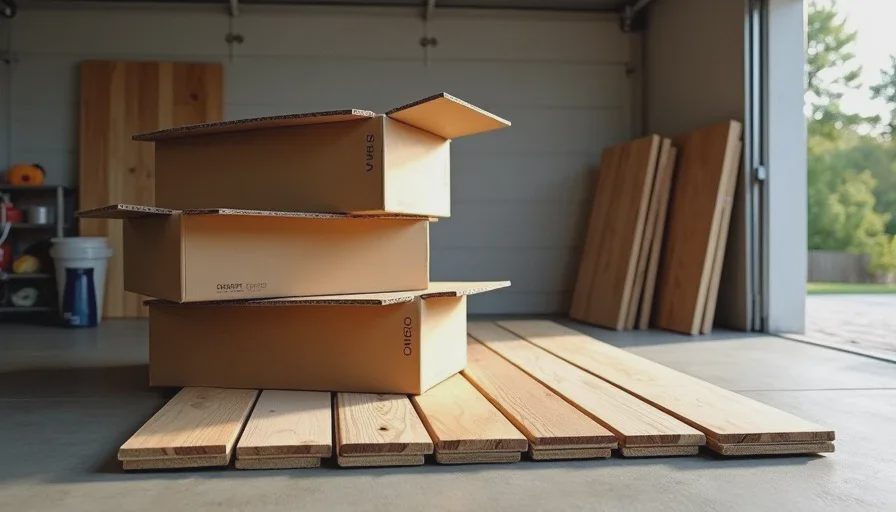
“Waterproof” is the most overused word in flooring marketing. I ordered six different LVP products that all carried some version of that claim. Every one of them went through the same sequence in our garage and then in a test section of the house: 24-hour water exposure on the surface, edge and seam inspection, VOC check, and a simulated slow leak that left water sitting against the perimeter. Six boxes went back. One product stayed.
The failures were not dramatic floods. They were the everyday conditions a house with a toddler, a dog, and a kitchen actually produces.
What the label actually means
Most manufacturers are precise in the fine print even when the headline is not. The plank itself—especially an SPC or rigid-core product—does not absorb water the way wood or HDF laminate does. You can submerge a single plank and it will look almost unchanged. That is true.
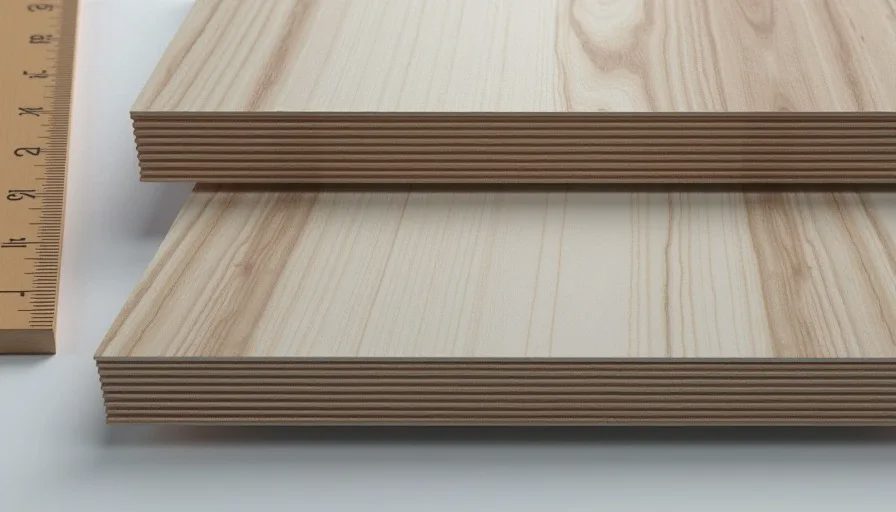
The installed floor is a different system. Click-lock joints are not sealed membranes. Expansion gaps at the walls are deliberate openings. Transitions, doorways, and cuts around cabinets create paths. Water that sits long enough finds those paths by gravity and capillary action. Once it is under the planks it is trapped between a relatively impermeable vinyl layer and the subfloor. The planks may survive. The subfloor, the underlayment, and the air quality in the room may not.
I treated every “waterproof” claim as a statement about the plank material, not about the finished floor as a waterproofing system. That distinction drove the testing.
The six that left
I kept the brand names out of the public write-up because the point is the failure modes, not a score-settling exercise. The patterns repeated across price points.
Two products showed visible edge peaking after a controlled 24-hour surface puddle that was allowed to sit and then wiped. The wear layer itself was fine. The locking edges had taken on just enough moisture or stress that the seam rose. Under foot traffic the ridge was detectable. In a kitchen that sees daily spills and wet mopping, that peaking would only get worse.
One rigid-core product passed the surface water test cleanly but produced a noticeable chemical odor that the VOC meter confirmed. The numbers dropped over two weeks of garage airing, but not enough for me to put it in a room where Mia spends hours on the floor. “Low-VOC” on the box did not match the reading in a closed space.
Another floated well in dry conditions but the attached underlayment held moisture like a sponge after the slow-leak simulation. When I pulled the planks the pad was still damp and the concrete below showed a clear moisture outline. The planks looked perfect. The interface did not.
Two more failed on installation practicality rather than pure water performance. One had a locking system so tight that cuts around door jambs and vents produced micro-gaps that would never close properly. Another had such aggressive bevels that every seam became a dirt and liquid collector. Both would have required constant maintenance that a household with a three-year-old does not reliably perform.
In each case the marketing language was some variation of “100% waterproof,” “waterproof core,” or “waterproof for life.” The warranties, when read carefully, excluded standing water, flooding, improper installation, and subfloor moisture. The exclusions covered exactly the conditions that appeared in testing.
The test methods that mattered
I did not rely on a quick splash and wipe. Each sample set received:
A 24-hour surface water exposure with the puddle contained so it could only escape through seams or edges.
Visual and tactile inspection of every joint under raking light.
A perimeter test that left water against the expansion gap for 12 hours to simulate a slow appliance drip or wet mopping that pools at the baseboard.
VOC measurement in a closed container after 72 hours, then again after two weeks of ventilation.
A simple submersion of a cut edge to confirm the core itself was stable.
I also checked the published installation requirements against our actual 1998 slab and wood subfloors. Several products demanded moisture vapor emission rates or relative humidity numbers that our older slab could not guarantee without additional mitigation. Installing them without that mitigation would have voided the warranty from day one.
What stayed and why
The product that remained used a dense rigid core, a tight but workable locking profile, minimal bevel, and a wear layer that did not telegraph every speck of grit. After the same water protocols the seams stayed flat. The odor was low enough that after a week of garage time it registered near our house baseline. The manufacturer’s documentation was clearer about the limits of the system and about the need for proper perimeter detailing and subfloor preparation.
It is still not a substitute for a tiled wet area with a proper membrane. No floating LVP is. In the kitchen and living areas where we expect spills, tracked-in rain, and the occasional overflow, it gives a workable margin as long as standing water is not ignored for days.
Practical rules I use now
Read past the word “waterproof.” Look for language about the core, the joint system, and the specific exclusions in the warranty. Ask what happens when water reaches the subfloor. If the answer is vague, treat the product as water-resistant at best.
Test samples the way the floor will actually be used. A single plank in a bucket proves the material. A small installed mock-up with real seams and a real perimeter proves the system.
Plan the transitions and the perimeter before the boxes arrive. Expansion gaps, caulk lines, and doorway details are where most real-world water problems begin. A product that performs well in the middle of the room can still fail at the edges if those details are ignored.
Ventilate new flooring aggressively, especially anything with a plasticizer or attached pad. The VOC meter does not care about the marketing claims.
Cost-per-year still applies. A cheaper “waterproof” floor that needs partial replacement in three years because seams peaked or the underlayment stayed wet is more expensive than a better-documented product that stays flat and quiet for a decade.
I sent six boxes back because the gap between the claim and the installed performance was too wide for a house that has to handle real water, real kids, and real time. The one that stayed earned its place by surviving the same conditions the others could not. That is the only test that matters once the flooring is under your feet instead of on a showroom sample board.




No comments yet — be the first to share a thought.