Heads up: I may earn a commission if you request quotes through links on this page. It never changes what I test or what I tell you.
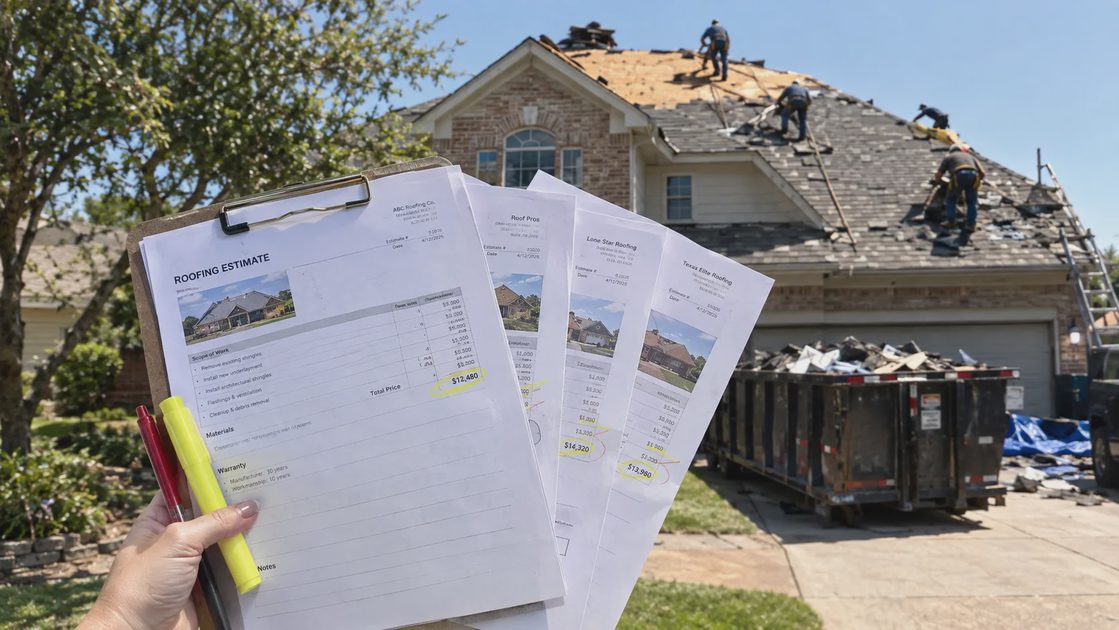
Twelve thousand five hundred dollars. That's how far apart four licensed, insured roofers were on the exact same roof, measured from the exact same satellite report.
The letter that started all this
Our roof was 27 years old, original to the house. It didn't leak. It looked fine from the driveway. Then our insurer mailed a renewal notice with one quiet change: on a roof that age, a future storm claim would pay actual cash value, not replacement cost.
In plain English: if hail took out our roof, they'd pay for a 27-year-old roof. Which is worth almost nothing.
That's happening all over Texas, Florida, Oklahoma and the Midwest right now. If you've gotten a letter like that, or a non-renewal notice, a new roof stops being optional. It becomes the thing standing between you and a five-figure out-of-pocket bill.
The four quotes, side by side
Our roof is 27 squares (about 2,700 sq ft of roof, 6/12 pitch). Every roofer got the same measurements. Here's what came back, plus what each one would really have cost once the "as needed" items showed up.
The lesson I didn't expect: the cheapest quote wasn't a scam, and the most expensive one wasn't premium. Roofer A just priced the risky parts as "as needed," and Roofer D priced his closing pressure. The honest middle quotes were the only two I could hold to a number.
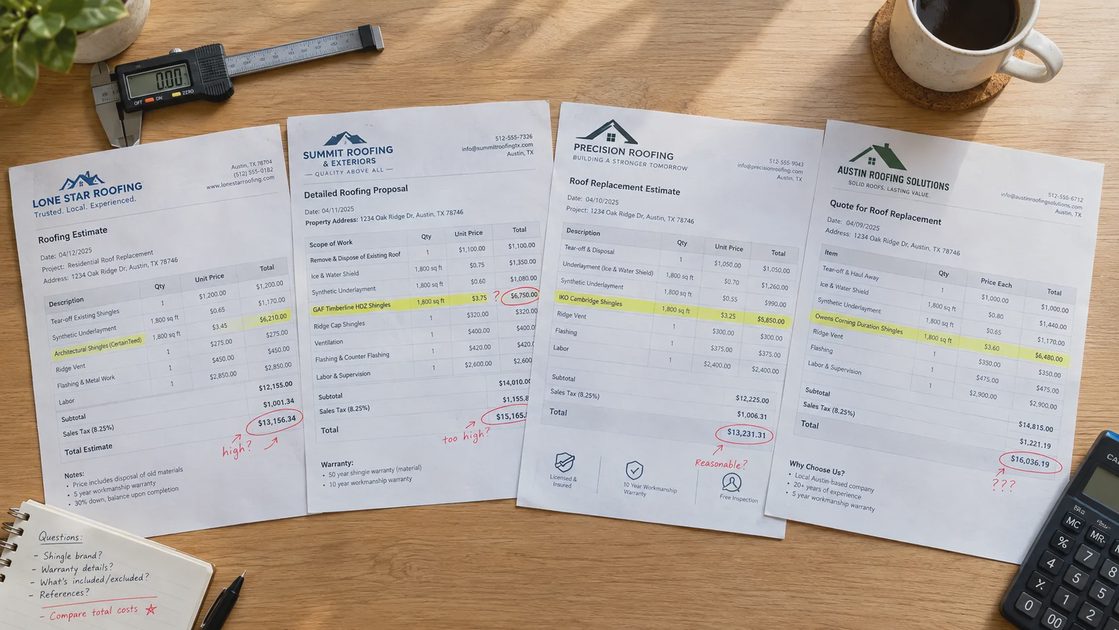
All four estimates, highlighted. Yellow means "defined." Red means "they'll decide later."
The five line items that swing your price by thousands
Shingles are maybe a third of the bill. The money hides in the stuff under them. These are the lines I now read before I even look at the total.
Line item | Typical 2026 cost | What a lowball quote does |
|---|---|---|
Decking (plywood/OSB) | $70–$120 / sheet | Leaves it "as needed" with no cap. Older homes often need 5–20 sheets. |
Drip edge & flashing | $600–$1,800 | Reuses old metal. Leaks start at the edges. |
Ice & water shield | $400–$1,500 | Skips valleys, chimneys and skylights. |
Ventilation (ridge + intake) | $500–$2,000 | Ignores it. A hot attic cooks new shingles and voids warranties. |
Permit & disposal | $300–$1,200 | "Not mentioned," which is how it ends up on your bill. |
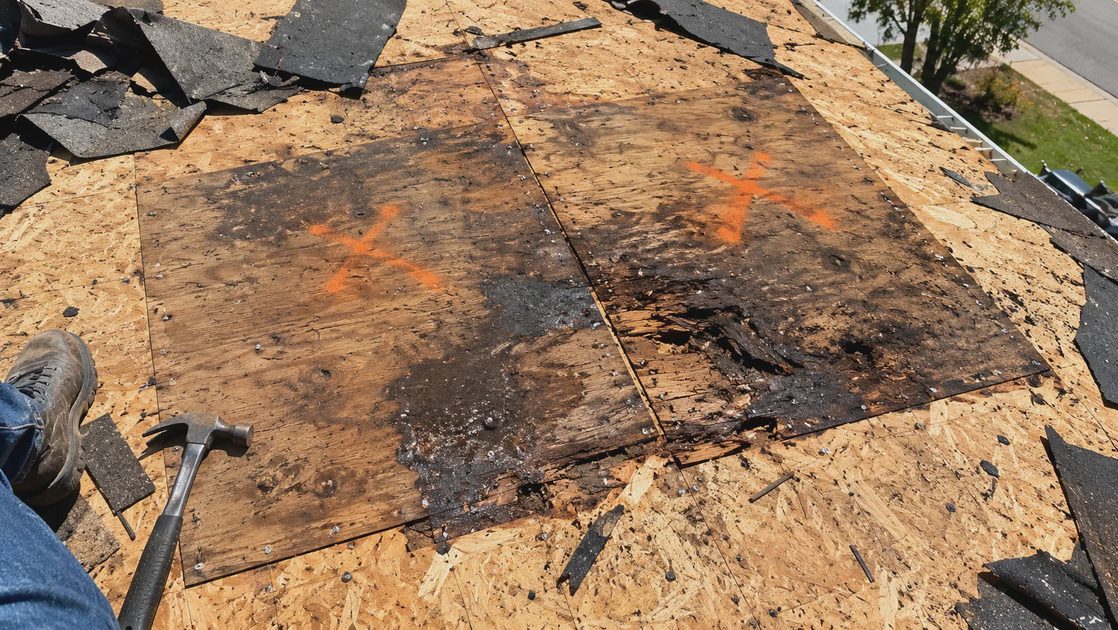
Our tear-off found 9 bad sheets. On Roofer A's terms, that's $855 we never saw coming.
What a new roof costs in 2026, by material
These are installed ranges I pulled from our quotes, reader-submitted invoices, and roofers I interviewed in four states. Your ZIP moves these a lot: labor in Boston isn't labor in Tulsa.
Material | Installed, per sq ft | Typical 2,000 sq ft roof | Lifespan | Best for |
|---|---|---|---|---|
Architectural asphalt | $4.50–$7.00 | $9,000–$14,000 | 20–30 yrs | Most homes, best value |
Class 4 impact asphalt | $5.50–$8.50 | $11,000–$17,000 | 25–30 yrs | Hail belt, insurance discounts |
Stone-coated steel | $9.00–$14.00 | $18,000–$28,000 | 40–50 yrs | Wind, hail, wildfire zones |
Standing seam metal | $10.00–$16.00 | $20,000–$32,000 | 40–60 yrs | Hot climates, forever homes |
Concrete tile | $9.00–$15.00 | $18,000–$30,000 | 40–50 yrs | Southwest, Florida styles |
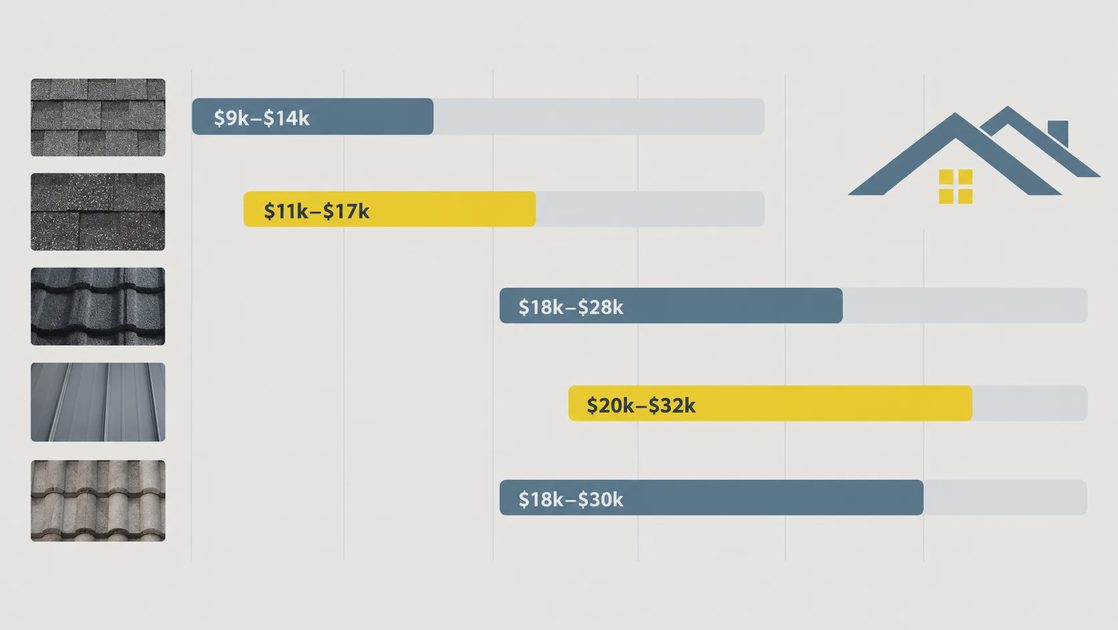
2026 installed cost ranges for a 2,000 sq ft roof.
The money part: 6 ways people actually pay less
I know the internet promised you a "roof rebate." Let me save you an afternoon.
That "federal roof tax credit" ad you saw? It's gone. The federal 25C home-improvement credit stopped covering roofing after 2021, and the credit ended entirely for work placed in service after December 31, 2025. If a roofer promises a federal credit on your 2026 shingles, ask for the IRS form number. Then walk.
Here's the money that is real.
1.Your homeowners insurance, if a storm did the damage
Insurance won't pay for an old roof wearing out. It will pay for sudden damage from hail, wind, or a fallen tree, often the whole roof. You pay your deductible; the insurer pays the rest. Many policies pay in two checks: the depreciated value first, then the "recoverable depreciation" once the work is done.
Most policies set a deadline to file, often one year after the storm in Texas. If you've had hail and never had the roof inspected, that clock may already be running.
2.State roof grants: up to $10,000 in some states
Several hurricane- and hail-belt states pay homeowners to upgrade to a stronger roof, usually one built to the IBHS FORTIFIED standard. These open in funding rounds and often run out fast.
State | Program | Up to | Good to know |
|---|---|---|---|
Alabama | Strengthen Alabama Homes | $10,000 | FORTIFIED Roof; applications open in rounds |
Louisiana | Louisiana Fortify Homes Program | $10,000 | FORTIFIED Roof; rounds fill quickly |
Mississippi | Strengthen Mississippi Homes | $10,000 | FORTIFIED Roof, coastal priority |
Oklahoma | Strengthen Oklahoma Homes | $10,000 | Hail- and wind-resistant roofs |
Florida | My Safe Florida Home | $10,000 | Free inspection first; matching grant |
South Carolina | SC Safe Home | Varies | Wind-mitigation upgrades, income tiers |
Texas | No statewide roof grant yet | n/a | Use insurer discounts and city repair programs |
Program details change often. Confirm amounts and open dates on each program's official site before you plan around them.
3.A lower insurance premium, every year
Many insurers discount the wind/hail part of your premium for a Class 4 impact-rated roof (UL 2218) or a FORTIFIED certificate. Ours came to about $410 a year. That's how Roofer C's higher price pays itself back. Call your agent and ask for the discount in writing before you pick a shingle.
4.USDA home repair help, if you qualify
In eligible rural areas, the USDA Section 504 program offers repair loans up to $40,000 at 1% fixed, plus grants up to $10,000 for homeowners 62+ with very low income. Many cities, including Austin, also run home repair programs for income-qualified owners.
5.Roofer financing, read carefully
Plenty of roofers offer 0% for 12–18 months. Look for the words "deferred interest": miss the payoff date and all the interest lands on you at once. True 0% plans exist; ask which one you're signing.
6.The tax benefit nobody mentions
A new roof is a capital improvement. It adds to your home's cost basis, which can shrink capital-gains tax when you sell. Keep the final invoice forever. (I'm not a tax pro; ask yours.)
Texas homeowners, read this twice. It's illegal in Texas for a roofer to "cover," waive, or rebate your insurance deductible (Texas Insurance Code, Chapter 707). A roofer also can't negotiate your claim for you. Anyone offering either is telling you exactly how they run their business.
Three roofs, three very different bills
Same problem, different paths. These are from our street and from readers who sent me their paperwork.
Red flags that should end the conversation
They knock right after a storm with out-of-state plates and no local address.
"We'll cover your deductible." Illegal in Texas, sketchy everywhere.
A big deposit before materials arrive. Pay as the job progresses.
No itemized, written scope. "Full replacement" is not a scope.
"This price is only good tonight." Roofer D's move. It was $6,250 of pressure.
They won't pull a permit or say you don't need one.
What I'd do if I were starting today
Get at least three itemized quotes. Four if you're in the hail belt. Before you sign anything, call your insurer about storm history and impact-roof discounts, and check whether your state has a grant round coming up.
Then compare line by line, not total by total. The quote that defines the most things is almost always the one that ends at the price it started.
We're now two storms into the new roof. David went up with me after the April hail. Zero bruises on the Class 4 shingles, and Mia's room stayed quiet enough during the storm that she slept through it. That last part wasn't in any quote.
Quick answers
How long does a roof replacement take?
Most homes take 1 to 3 days. Bad decking, steep pitch, or tile and metal can stretch it to a week.
Can I just put new shingles over the old ones?
Many codes allow one overlay, but it hides rotten decking and some insurers dislike it. We'd tear off every time.
Will insurance pay for a roof that's just old?
No. Insurance covers sudden damage like hail or wind, not wear. Have it inspected if you've had a storm since installation.
When is the cheapest time to replace a roof?
Late fall and winter are slower in many areas, and slower months often mean better scheduling and pricing. Right after a big storm is the most expensive time.
Does a new roof increase home value?
It rarely returns 100% of the cost at sale, but it helps buyers get insured and financed. An old roof can stall a sale entirely.
Does requesting quotes commit me to anything?
No. You're comparing prices. You only hire someone if you sign their contract.
Elena's Durable List is reader-supported. When you request quotes through our links we may earn a commission, at no cost to you. Prices, program details, and insurance rules vary by location and change often; figures here are estimates based on our research and readers' invoices, not offers. Stories reflect individual experiences and aren't typical results. This is not legal, tax, or insurance advice.





No comments yet — be the first to share a thought.