
I wash a surprising amount of baby clothes by hand. Stains that need pretreatment, small loads that do not justify a full machine cycle, and the quick rinse of something that just got spit up on. The sink is the workstation. Over the last year I tested twelve different kitchen sinks—some in our own renovation mock-ups, some in showrooms, some in friends’ houses that were willing to let me bring a bag of onesies and a measuring tape.
The variable that mattered most was not the overall size of the sink or the number of bowls. It was the depth of the basin combined with the shape of the walls and the relationship between the faucet stream and the drain.
How the test worked
Every trial used the same protocol. I filled the sink to a working level with warm water and a small amount of detergent. I washed six to eight mixed baby garments—onesies, bibs, and a couple of cloths—using the same motions I use at home: agitate, scrub the stained spots against itself or against a washboard if one was present, rinse under the running faucet, and wring. I noted three things:
How high the water climbed the sides or jumped the rim when I agitated or when the faucet hit the surface.
Whether my sleeves, the front of my shirt, or the surrounding counter ended up wet.
Whether I could keep one hand relatively free (useful when a toddler is nearby) without losing control of the load.
I also measured the actual bowl depth from the top of the rim or counter level to the lowest point of the basin, and I checked the horizontal distance from the faucet spout to the point where the water landed.
What the depths revealed
The sinks fell into clear groups.
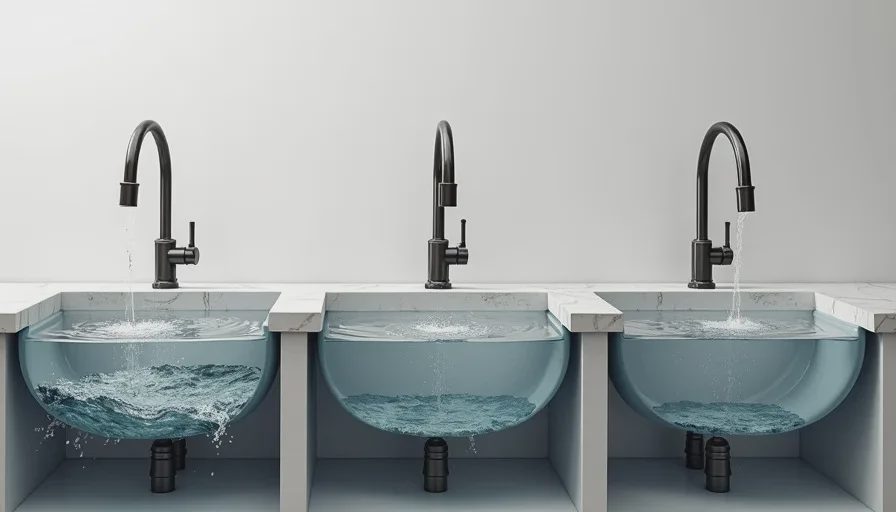
Eight-inch and shallower bowls produced the most splash. When I agitated a load of wet clothes the water had less vertical room to rise before it reached the rim. A strong faucet stream hitting the surface at a shallow angle sent droplets onto the counter and sometimes onto me. Rinsing under the running water required more careful aim; any slight misalignment sent a sheet of water over the front edge. After three or four garments my sleeves were damp and the counter needed wiping.
Nine-inch bowls were the practical middle. Splash still occurred, but most of it stayed inside the basin. I could agitate without constant vigilance. Rinsing was more forgiving. The extra inch of depth gave the water column room to dissipate energy before it reached the rim. For daily baby-clothes work this depth felt usable without being excessive.
Ten-inch and deeper bowls contained almost everything. Even vigorous washing kept the water inside. The faucet stream had farther to travel before it hit the surface, and the resulting splash had more wall to climb before escaping. I finished loads with dry sleeves and a mostly dry counter. The trade-off appeared in reach. At my height (5'4") a true ten-inch undermount bowl puts the bottom of the sink far enough down that scrubbing the center requires a noticeable forward lean. For short sessions it is fine. For a long pretreatment session it becomes tiring.
Bowl shape modified the depth effect. Sinks with steeper side walls and a flatter bottom kept water moving vertically rather than spreading outward. Wider, more rounded basins allowed the water to travel farther horizontally and escape more easily even at the same measured depth. A tight radius at the bottom corners also helped; water and small garments did not get trapped in a hard-to-reach pocket.
Faucet interaction
Depth alone does not decide the outcome. The faucet spout height and reach determine where the water column lands. When the stream hit near the center of a deep bowl, splash stayed low. When it hit close to a side wall or near the front rim, even a ten-inch sink produced more overspray. Pull-down sprayers that could be aimed precisely reduced the problem, but only if the hose length and retraction behavior allowed comfortable one-handed use while the other hand held a wet garment.
I paid attention to the aerator as well. A well-aerated, lower-flow stream splashed less than a hard, unaerated jet at the same volume. Several otherwise good sinks were handicapped by an aggressive factory aerator that turned every rinse into a small fountain.
Real-use notes from a household with a toddler
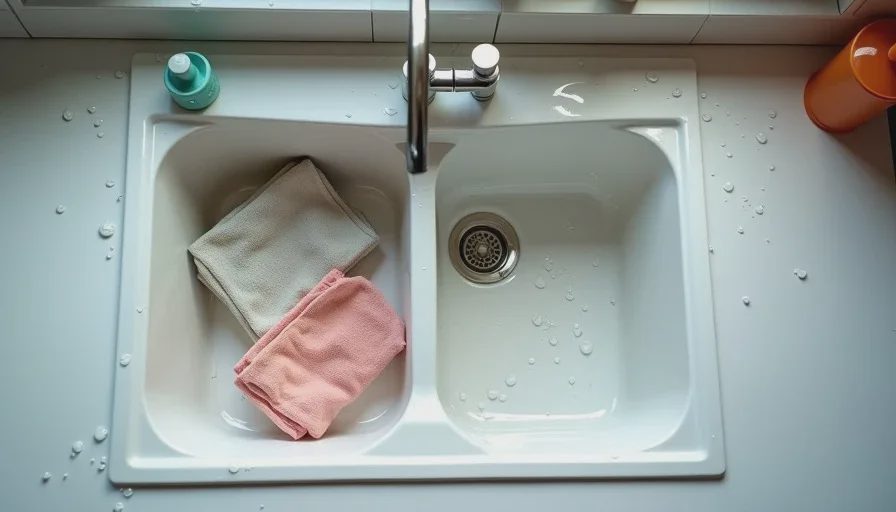
Speed matters. When Mia is nearby I want the wash cycle short and the cleanup minimal. A sink that forces me to wipe the entire counter and change my shirt after every small load is not practical. The deeper basins that kept water contained also let me leave the wet clothes in the sink for a few minutes without everything dripping onto the floor or cabinet face.
Undermount installations changed the effective depth. An eight-inch sink undermounted under a thick stone counter becomes closer to nine inches of usable depth from the counter surface. The reverse is also true: a drop-in sink with a high rim can feel shallower than its nominal number because the working plane starts higher. I measured from the actual working surface, not the manufacturer’s nominal depth.
Cabinet and plumbing clearance set hard limits. A ten-inch sink requires enough vertical space below for the drain, disposal if present, and any water filter. In our 1998 house some of the older base cabinets simply could not accept the deeper bowls without modification.
What I specify now
For the primary kitchen sink I look for a true nine- to ten-inch depth with relatively steep walls, a faucet whose stream lands near the center of the bowl, and a good aerator. That combination keeps baby-clothes washing (and normal dish work) inside the basin. For a secondary prep sink a slightly shallower bowl is acceptable if the main cleanup sink is deep enough.
I no longer treat sink depth as a minor specification. It is one of the few dimensions that directly determines whether a routine task stays contained or turns into a cleanup project of its own. After twelve sinks and a lot of wet onesies, the pattern is consistent: an extra inch of well-shaped depth buys measurable control over splash, keeps sleeves dry, and leaves one hand freer for the rest of the household. That is the difference between a sink that works with a toddler in the room and one that works against you.
No comments yet — be the first to share a thought.