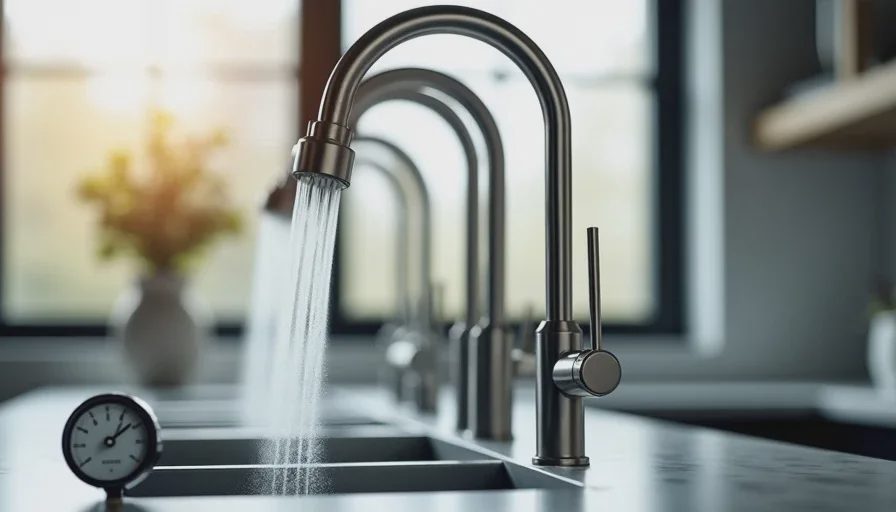
Long acrylic nails change how you grip a spray head. The surface area is smaller, the leverage is different, and any sticky or high-force mechanism becomes obvious immediately. I wore the same set for every test.
I evaluated eight pull-down models across price points. Criteria were: smoothness of the pull, effort required to extend fully, consistency of the spray pattern, and the force and speed of the automatic retraction. I also washed a load of baby clothes in each sink to check splash and whether the hose length was actually useful.
What failed
Two models had retraction springs that were simply too aggressive. The spray head snapped back hard enough that I flinched every time. On one of them the head struck the deck with a sharp sound. I would not trust it around a stone or porcelain sink long-term, and I would not trust it around a toddler’s fingers.
One mid-price model had a hose that dragged and stuck at about two-thirds extension. With nails it was difficult to free without using both hands. That one went back.
What worked
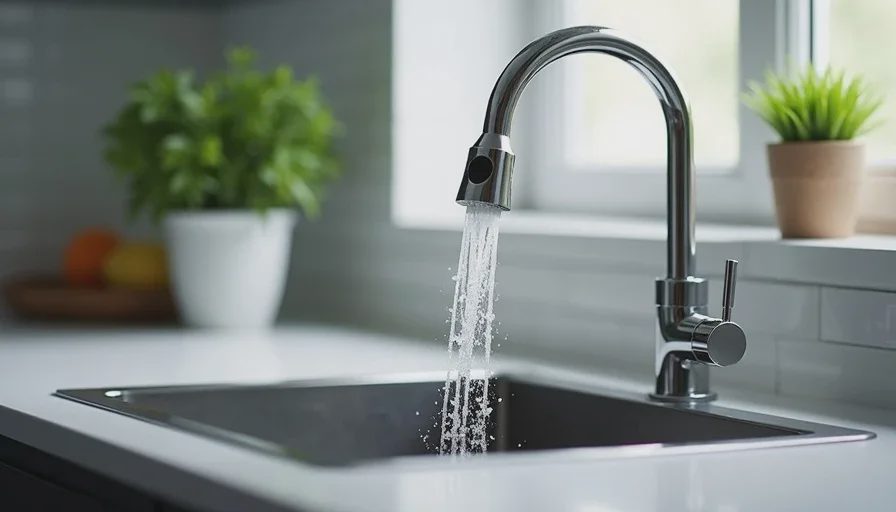
The smoothest pull and most controlled retraction belonged to a mid-to-high model with a magnetic docking system rather than a pure spring. The head returned firmly but without the violent snap. Spray pattern stayed even at different flow rates. Hose length was generous enough to reach the far side of a standard 33-inch sink and into a nearby pot filler zone.
A lower-priced model surprised me. The retraction was softer than expected and the spray head had enough weight to dock cleanly. It did not feel as precise as the magnetic one, but it never snapped and the nails never slipped. For the money it was the best performer in the group.
Nail-specific notes
Textured or rubberized grip rings helped. Smooth chrome heads required more careful finger placement. Any model that needed a hard squeeze to change spray modes was annoying with nails. The best ones used a simple button or a light toggle.
Hose material mattered. Braided stainless felt durable but could catch slightly. The smoother polymer-coated hoses pulled more cleanly.
Sink depth interaction
I tested in sinks ranging from 8 to 10 inches deep. Shallower sinks made splash more likely when the spray was aimed at the bottom. The deeper basins forgave more aggressive spray angles and made washing larger items easier. The faucet that could reach the corners of a deep sink without the hose binding ranked higher in daily use.
Three-month update on the keepers
The magnetic-dock model is still in the primary kitchen. Retraction force has not changed. The budget smooth performer is in the secondary prep sink and continues to dock without drama. Neither has developed the sticky hose behavior that appeared on the one I returned.
For anyone with longer nails, or anyone who simply dislikes fighting a faucet, the retraction behavior is more important than the finish options or the number of spray settings. A faucet that snaps back hard enough to make you flinch is a daily irritation and a long-term risk to the sink. The ones that return firmly but under control are the ones that stay.

No comments yet — be the first to share a thought.