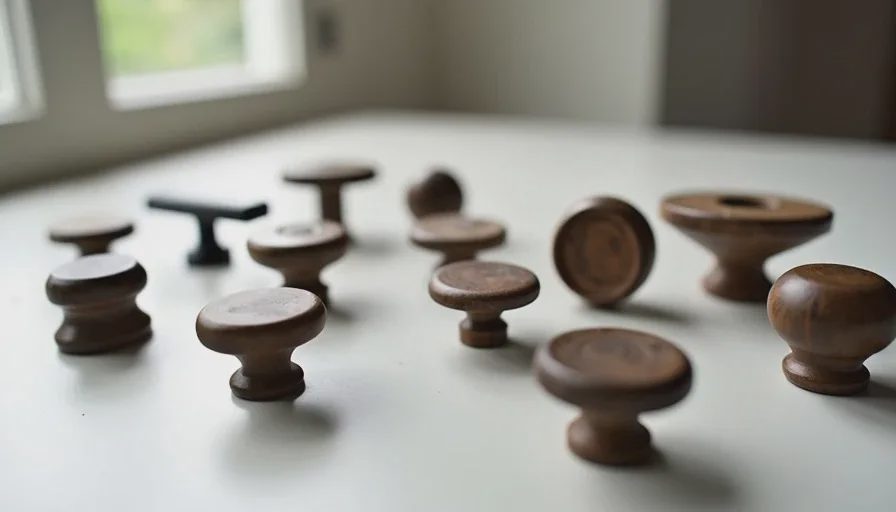
Cabinet hardware looks minor until a three-year-old treats every projecting piece as a climbing hold, a finger puzzle, or something to catch a sleeve on. I collected fifty pulls and knobs—bar pulls, cup pulls, knobs, edge pulls, and a few decorative outliers—and put them through the same sequence: edge inspection, gap measurement, fabric-snag test, and real observation with Mia in the room.
The question was simple. Would this hardware catch a small finger, snag clothing, create a sharp impact point, or give a toddler an easy grip for climbing or yanking? Anything that failed those checks left the house.
How the testing worked
I laid every piece on the workbench first. A fingernail run along every edge and corner revealed burrs, sharp transitions, or thin metal that could cut. I measured the projection from the cabinet face and the size of any open loop or gap large enough for a small finger. Then I dragged a soft cotton sleeve and a piece of knit fabric across each pull at different angles to see what caught and held.
Installation mattered. I mounted samples on spare cabinet doors and drawer fronts at standard heights. Mia’s reach and climbing attempts supplied the final data. I also opened and closed the doors repeatedly while wearing longer nails to check whether the shape fought a normal adult grip.
What failed immediately
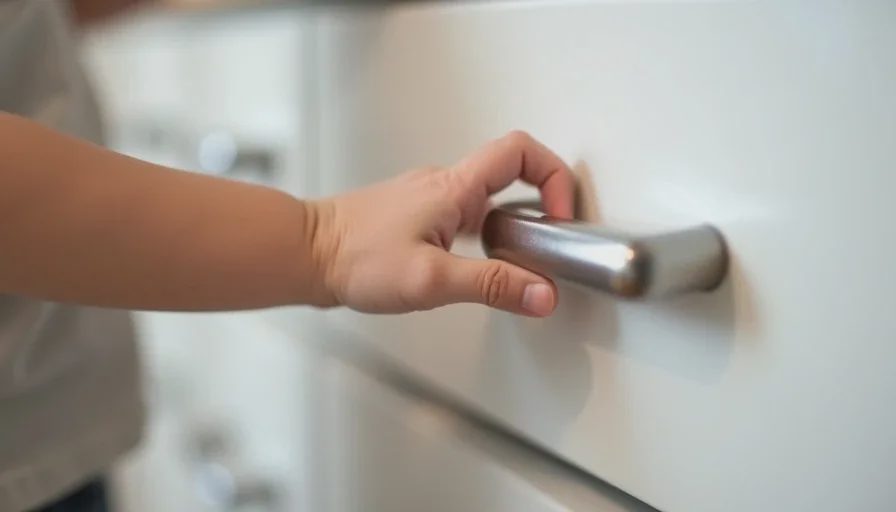
Thin, open bar pulls with square or sharply rectangular profiles were the worst offenders. The underside edges caught fabric consistently. Several had enough open space that a small finger could slide in and jam if the door moved. A few decorative pulls with scrollwork or pointed ends created clear impact hazards at toddler head and shoulder height.
Cup pulls with deep, narrow openings trapped the soft test fabric and would do the same with a sleeve or the edge of a shirt. Some inexpensive stamped-metal knobs had rough parting lines or unfinished edges that scraped skin on a light pass.
Anything that projected more than about an inch and a half while offering a horizontal ledge became a potential step. Mia demonstrated this without being asked. A protruding pull at the right height turns a cabinet into a ladder.
What passed
Rounded knobs with a smooth, continuous curve performed best on the snag and edge tests. No thin lips, no open loops, no sharp transitions. A simple mushroom or ball shape gives an adult a secure grip while offering a toddler very little to catch clothing on or to use as a precise handhold for climbing.
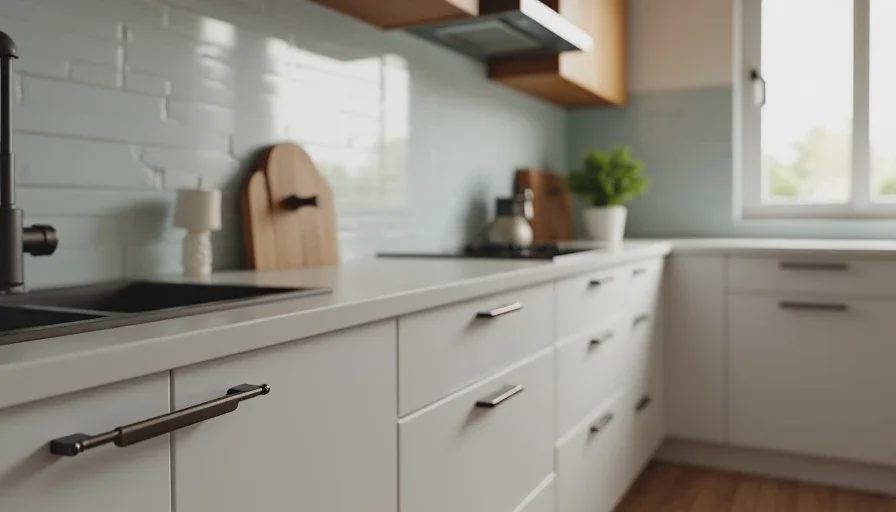
Low-profile bar pulls with fully rounded edges and a modest projection also worked. The key was a generous radius on every corner and a smooth underside. When the bar sat close enough to the face that a small finger could not easily hook underneath, the snag risk dropped sharply. Some modern edge pulls that sit almost flush with the door face eliminated projection entirely; they require a fingertip grip but remove the climbing and snag variables.
Solid wood or well-finished metal with no plating that could flake also ranked higher. Rough castings or cheap plating that left micro-burrs failed the fingernail test even when the overall shape looked rounded.
Mounting and long-term behavior
Hardware that loosened under repeated toddler yanking created new hazards. A pull that starts secure and later spins or pulls away from the door becomes a sharp or unstable object. I preferred pieces that used two screws with solid thread engagement into the door or drawer material, or single-post knobs with a robust set screw. Soft wood doors needed longer screws or inserts; particleboard doors needed careful pilot holes and sometimes threaded inserts to keep the hardware from working free.
I also checked the back side. Sharp screw tips or protruding nuts inside the cabinet can catch fingers when someone reaches in. Caps or proper length screws solved that.
Practical recommendations from the set
For cabinets and drawers in rooms Mia can reach, I now default to:
Smooth, rounded knobs with no thin edges
Low-profile bar pulls with continuous rounded geometry and limited projection
Edge or finger pulls that sit nearly flush when the design allows
I avoid open rectangular bars, ornate scrollwork, deep cup pulls, and anything with a pointed or squared corner that sits at child height. In adult-only zones or upper cabinets the rules can relax, but consistency across a kitchen or hallway reduces the chance of a surprise snag.
Finish color and style still matter for the overall look. Within the safe geometry set there are plenty of options in matte black, brushed nickel, unlacquered brass, and painted wood. The safety filter simply removes the shapes that create daily friction with a small child in the house.
The Mia test, one more time
Every review ends with the same question. What would Mia do with it? With these pulls the answer is usually “ignore it” or “touch it briefly and move on.” That is the goal. Hardware should open the door for the adult and stay out of the way of the child. When a pull becomes a toy, a climbing aid, or a fabric trap, it has failed the basic requirement of living in a house with a toddler.
Fifty pieces later the pattern is consistent. Rounded, smooth, modestly projecting hardware stays on the cabinets. Everything else goes back in the box. The difference is not subtle once you have watched a small hand explore every surface at thirty inches off the floor. Choose the shape that does not invite the exploration.


No comments yet — be the first to share a thought.