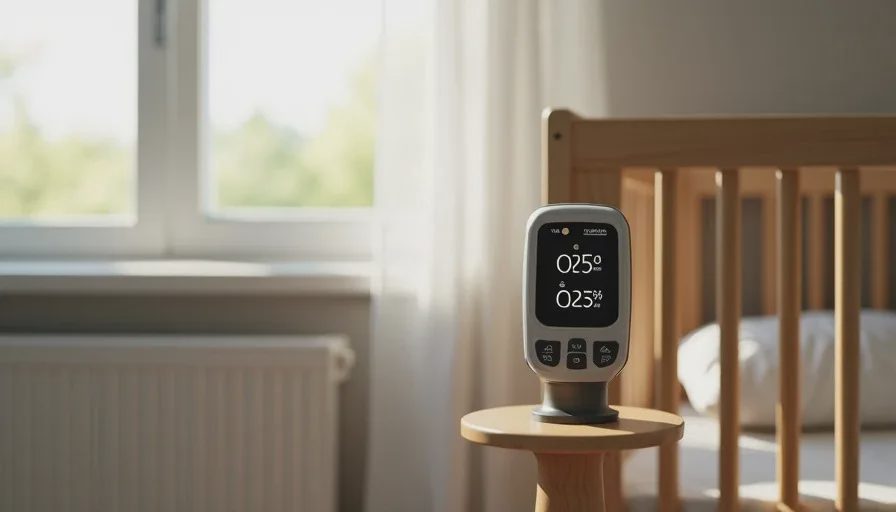
I bought a decent consumer-grade VOC meter and a set of passive badges for formaldehyde after the first round of flooring samples arrived. Our 1998 house already had background levels from the original materials, so every new product had to be measured against that baseline.
Mia’s room was the priority. She spends the most time on the floor and still puts things in her mouth. I tested the empty room first, then after each major addition, with doors closed for 24 hours and the HVAC off.
Baseline and method
Empty room, windows closed 24 hours: total VOCs around 180–220 µg/m³ depending on outdoor temperature and whether the old carpet in the hallway was still present. Formaldehyde hovered near 15–20 µg/m³. These are not laboratory numbers, but they are consistent enough for comparison.
I tested:
New LVP planks
Engineered hardwood samples
Two different “low-VOC” paints
A new crib mattress
A foam play mat
A solid wood dresser
Curtains and a small area rug
Each product sat in the closed room for 72 hours before the final reading. I also did a short “sniff test” and noted any odor.
Flooring results
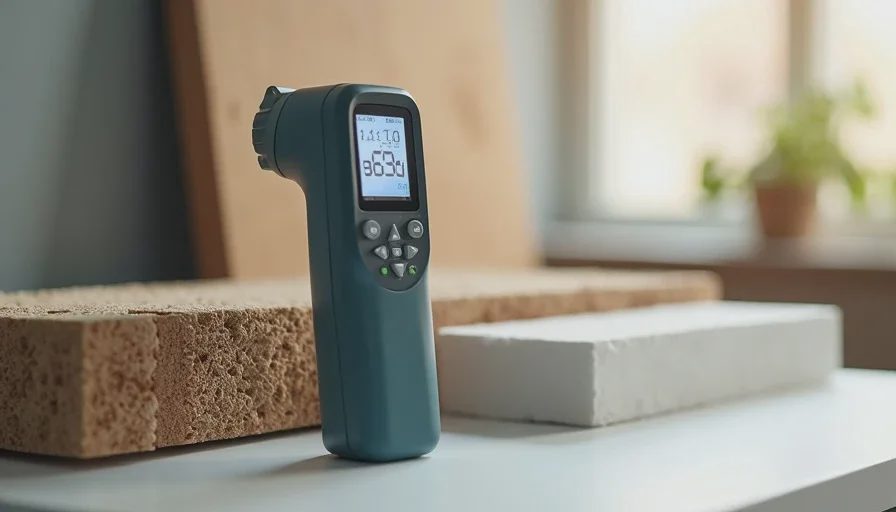
The LVP labeled “waterproof and low VOC” produced a clear spike. Total VOCs rose to 450–500 µg/m³ in the first 48 hours, then declined. Formaldehyde stayed relatively flat. The smell was the typical new-plastic scent that faded but did not disappear completely in three weeks.
The engineered hardwood with a factory UV finish produced a smaller increase, mostly in the first day. After 72 hours it was closer to baseline. The unfinished solid hardwood samples we later sealed ourselves with a water-based finish registered the lowest of the hard-surface options.
I rejected six boxes of one “waterproof” LVP specifically because the off-gassing remained noticeable after the initial cure window the manufacturer claimed. The one that stayed had lower numbers and almost no residual odor after two weeks of ventilation.
Furniture and soft goods
The crib mattress marketed as organic cotton and plant-based foam still registered elevated VOCs for the first week. The numbers dropped faster than the LVP, but the first few nights I ran a small air purifier and kept the window cracked.
The foam play mat was the worst single item. It produced a sharp chemical smell and the highest short-term VOC reading of anything I brought into the room. It went back.
The solid wood dresser finished with a water-based lacquer added almost nothing measurable after the first day. The curtains (polyester blend) and the small wool-blend rug were essentially neutral.
Paint
One “zero-VOC” paint still smelled. The meter confirmed a modest rise that cleared within 48 hours with good ventilation. The second brand, also labeled low-VOC, performed better on both odor and numbers. I used the second one for the final coats.
What actually reduced the load
Ventilation mattered more than any single product claim. Cross-breezes for several days after installation dropped readings faster than waiting for passive off-gassing alone. An activated-carbon filter in the room air purifier helped with the residual plastic smell from the LVP that stayed.
Temperature and humidity affected the numbers. Warmer days produced higher readings from the same materials. This matches what factory QC people already know: off-gassing rates rise with heat.
I now open every new furniture piece and flooring box in the garage or on the porch for at least a week before it comes inside. The difference in the room readings is obvious.
Practical thresholds I use
I treat sustained total VOC readings above roughly 400–500 µg/m³ in a closed bedroom as a reason to keep ventilating or to reject the product. Formaldehyde above 30–40 µg/m³ gets the same treatment. These are conservative personal limits, not regulatory numbers. Regulatory limits for many VOCs are higher and are set for workplaces, not for a toddler’s sleeping space.
The marketing language “low-VOC” or “green” is not standardized enough to trust without measurement or at least a strong ventilation protocol. Some products that carried those labels still produced noticeable spikes. Some that did not carry them performed better.
For a nursery, the order of operations that worked here was: choose the lowest-emitting materials I could verify, ventilate aggressively during and after installation, and keep soft foam products out until they have off-gassed elsewhere. The solid wood and the better-engineered hardwood needed the least intervention. The plastic-heavy products needed the most.
Mia still ends up on the floor. I would rather the floor and the mattress add as little as possible to the air she breathes while she is down there.




No comments yet — be the first to share a thought.