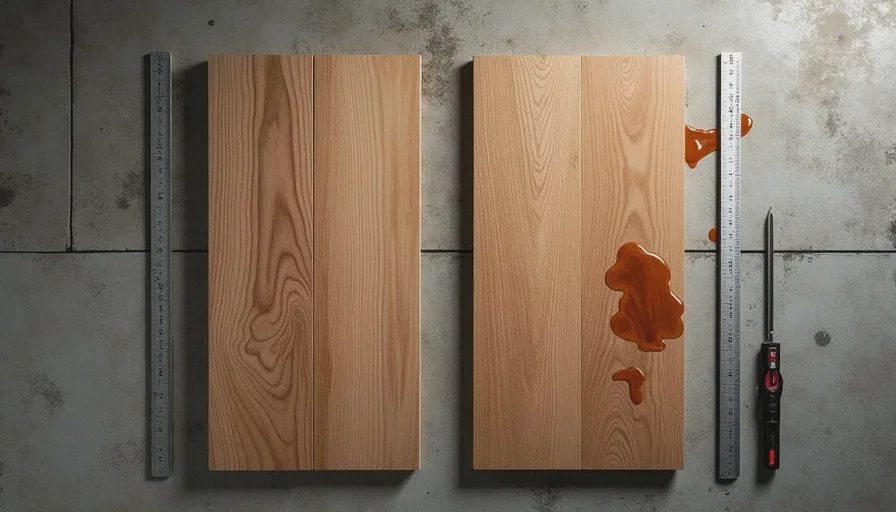
I expected the expensive planks to win. At $12 per square foot the marketing promised a thicker wear layer, a more rigid core, superior stain resistance, and a finish that would look new after years of kids and dogs. The $4.50 option was positioned as a solid builder-grade or value choice. We installed small test sections of both in the same room, under the same traffic, and put them through the same sequence of spills, cleaning, and abrasion.
The cheaper floor performed better on the metrics that matter in a house with a toddler.
The test setup
Both products were rigid-core LVP with attached underlayment. I matched the installation conditions as closely as possible: same subfloor preparation, same expansion gaps, same acclimation time. Each section was roughly 40 square feet so we had enough surface for repeated testing without edge effects dominating the results.
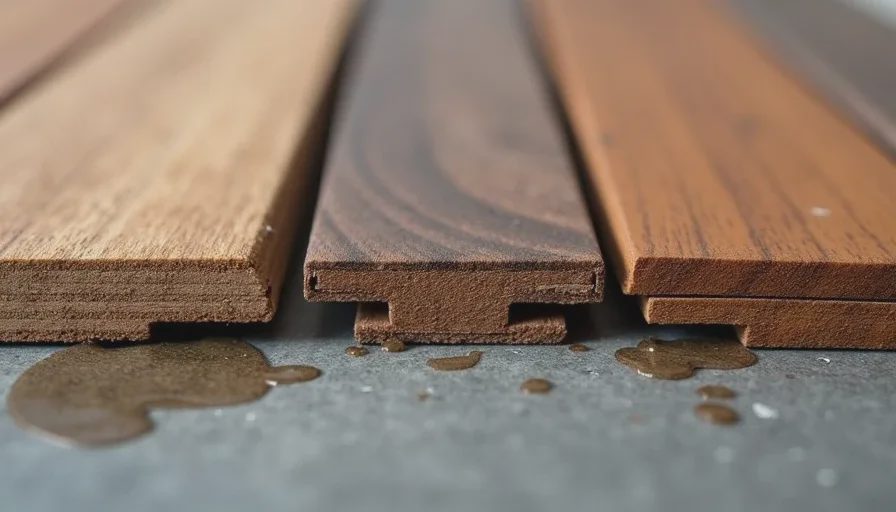
The protocol repeated what we use for every flooring candidate:
Timed spills of tomato sauce, red wine, and baby-food puree left for 24 hours, then cleaned with the same pH-neutral cleaner and a microfiber pad.
Wet mopping with a one-hand technique (the other hand theoretically holding a child).
Rolling chair traffic and foot traffic in shoes and bare feet.
A simple scratch and scuff series using keys, a dropped utensil, and the edge of a toy.
VOC readings in a closed space after installation and again after two weeks of ventilation.
Visual and tactile inspection of seams under raking light after four weeks of normal use.
I also tracked how the floors felt underfoot and how they looked at the end of the day when the light was low and every scuff became visible.
Spill and clean results
The premium planks claimed a higher wear-layer thickness and a more advanced topcoat. In the 24-hour stain tests the difference was smaller than the price gap suggested. Both released the tomato sauce and the baby food with normal cleaning. The red wine left a faint shadow on both after the first pass; a second pass with a bit more dwell time removed it from both.
Where the budget planks pulled ahead was in the ease of the daily clean. The surface of the less expensive product released fine dust and tracked-in grit more readily. The premium surface held a light film that required more pressure or a second pass to look fully clean. Under the one-hand mop test the cheaper floor returned to “done” faster. In a household where floor time is limited, that difference compounds.
Seam behavior after repeated wet cleaning also favored the budget option. The locking profile on the lower-priced planks stayed tighter. The premium planks developed a slight telegraphing at a few end joints after several wet-dry cycles. Nothing dramatic, but visible under low-angle light and detectable under bare feet.
Abrasion and daily wear
Neither floor was destroyed by the scratch protocol. The premium wear layer resisted deep scratches slightly better in the most aggressive key test. On the more realistic scuffs from shoes, toys, and chair movement, the two floors looked comparable after four weeks. The budget planks actually hid fine scratches better because of a slightly more matte, multi-tonal print. The premium floor’s higher-gloss or more uniform print made every micro-abrasion more obvious.
Underfoot the rigid cores felt similar. Neither was soft. The attached pads were both adequate for a slab; neither eliminated the hollow sound completely. Impact dents from a dropped can were slightly more visible on the budget floor, which is consistent with a somewhat less dense core. In normal residential use the difference was minor.
The odor and VOC difference
This was the clearest gap. The premium product carried a stronger initial plastic-and-plasticizer smell. The VOC meter confirmed higher readings in the first week. After two weeks of open windows and a running air purifier the numbers came down, but they started higher and declined more slowly than the budget planks. The less expensive floor was close to our house baseline within ten days. For a room that Mia uses, the lower off-gassing load mattered more than the marketing claims about “premium” formulation.
Why the expensive option underperformed
Price often buys better marketing, tighter color consistency across lots, and a thicker warranty document. It does not automatically buy a better locking system, a more cleanable surface texture, or lower VOC. In this pair the budget product simply had a locking geometry that stayed tighter under real wet-dry cycling and a surface that released soil more easily. The premium product’s advantages in pure scratch resistance and brand positioning did not outweigh those practical gaps in our household conditions.
I have seen the reverse result with other pairings. Sometimes the higher-priced floor is denser, quieter, and cleaner. The point is not that cheap always wins. The point is that the price tag is a weak predictor until you run the same tests the floor will actually face.
What I look for now
Wear-layer thickness is a starting filter, not the final answer. I want to see how the surface behaves with real soil and real cleaning methods. Locking strength matters more than the brochure photo of the joint. VOC behavior in a closed room matters more than the “low-VOC” claim on the box. And the floor has to survive the one-hand mop test because that is how the floor gets cleaned when a toddler is in the other arm.
The $4.50 planks are still in the house. The $12 planks went back. Cost-per-year favored the budget option once cleaning time, seam stability, and air quality were included in the math. A more expensive floor that needs more maintenance and starts with higher off-gassing is not a better investment simply because the square-foot price is higher.
Strip the filter. Run the spill. Check the seams after real traffic. Measure the air. The number on the sample tag is only one data point. The floor under your feet after a month of actual living is the one that counts.



No comments yet — be the first to share a thought.