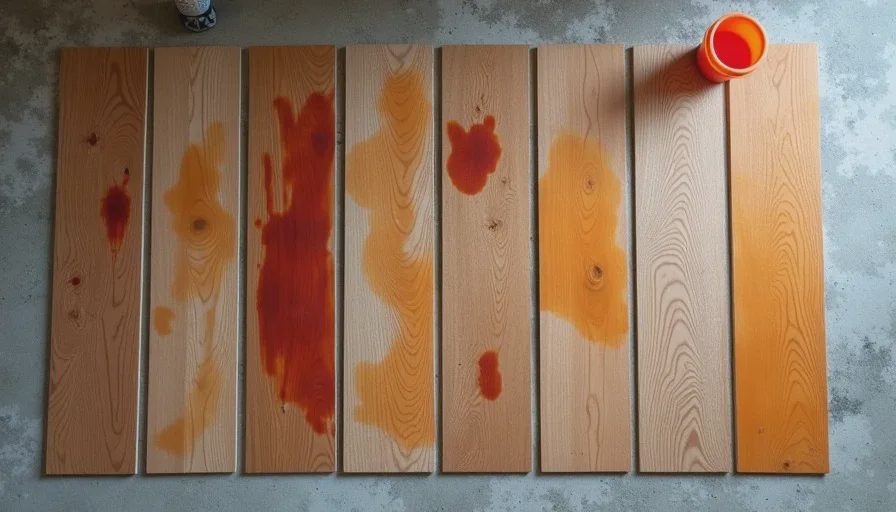
I do not trust a floor until I have watched a three-year-old destroy it. Marketing claims about “100% waterproof” and “pet-proof” mean nothing if the surface still shows a ghost of last night’s spaghetti sauce after you wipe it. So before we committed to any flooring in the gut renovation, I ran the same test on every contender: pour real kitchen messes, wait twenty-four hours, then clean with one hand while the other holds Mia.
That is the one-hand mop test. It is not elegant. It is the only test that matches how a parent actually lives.
The Setup and the Contenders
I ordered eight samples that represent what most people actually buy for a main-floor renovation in a house with kids and dogs:
Three LVP options: one 12-mil wear layer, one 20-mil wear layer with SPC core, one rigid-core “waterproof” marketed for kitchens.
Three engineered hardwood options: 2 mm oak wear layer, 3 mm white oak with aluminum-oxide finish, and a higher-end 4 mm European oak with a hard-wax oil finish.
Two control samples: a basic laminate and a porcelain tile (the latter mainly to set the upper bar for cleanability).
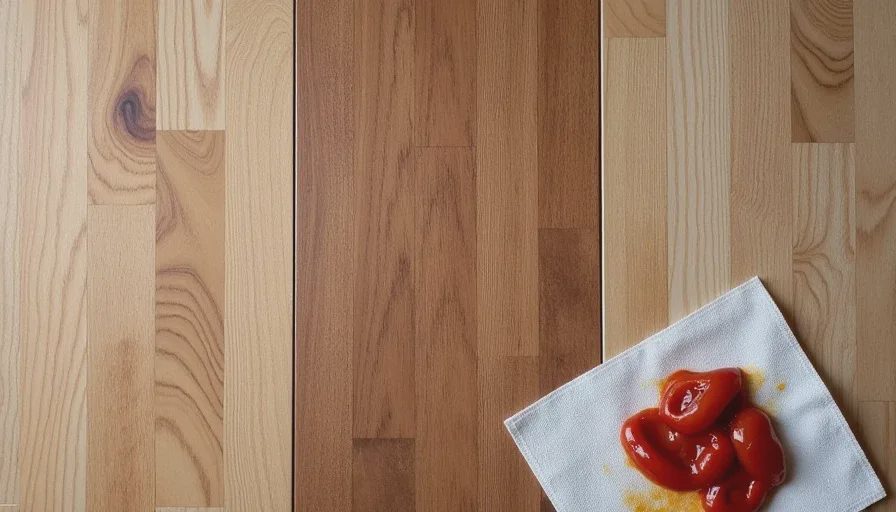
Each plank sat on the same plywood subfloor in the temporary kitchen. I poured the same volume of three substances onto every surface:
Store-bought tomato sauce (acidic, oily, pigment-heavy)
Cheap red wine (alcohol + tannins + color)
Pureed sweet potato from Mia’s lunch (starchy, sticky, orange)
I left them uncovered for twenty-four hours at normal indoor temperature—no fans, no deliberate heat. Then I cleaned each sample using only my right hand while carrying Mia on my left hip. The cleaning tool was a standard microfiber mop head dampened with plain water first, then with a neutral pH cleaner if needed. No scrubbing pads, no magic erasers, no special solutions unless the floor still looked stained after two passes.
I also recorded initial VOC readings with a handheld meter in a closed room twenty-four hours after the samples were unboxed, and again after seven days of normal ventilation.
What the 24-Hour Spills Actually Did
Tomato Sauce
The 12-mil LVP showed a faint pink haze that required a second pass with cleaner. The 20-mil SPC LVP wiped completely clean with water alone. The third LVP (marketed as kitchen-grade) also cleaned with water, but the embossed grain held a tiny bit of residue in the deeper valleys until I pressed harder.
Engineered hardwood behaved differently. The 2 mm and 3 mm factory-finished pieces absorbed enough pigment that a pale orange ring remained after two careful passes. The hard-wax oil 4 mm sample cleaned better than the aluminum-oxide ones, but still needed a third wipe and left a slight darkening in the grain. None of the wood samples swelled or cupping appeared after twenty-four hours, but the color change was permanent enough that I would notice it every time I walked past.
Red Wine
Wine is the harshest of the three for wood. All three engineered samples showed visible staining that would not fully lift without a wood-specific cleaner and light buffing. The hard-wax oil version fared best of the three, but still carried a shadow. The LVP samples, including the thinner 12-mil, released the wine completely with water. No residual color, no dull spots.
Sweet-Potato Puree
This one surprised me. The starchy film dried into a thin crust that lifted easily from every LVP surface. On the engineered hardwood it required slightly more pressure and left a temporary matte patch until the finish recovered its sheen overnight. Not a failure, but enough friction that one-handed cleaning felt slower.
The One-Hand Reality Check
Cleaning while holding a toddler is not theoretical. Your available force is limited. You cannot get on your knees and scrub. You cannot rinse the mop frequently. The floor either releases the mess with light pressure or it does not.
In that constraint, every LVP sample outperformed every engineered hardwood sample. The 20-mil SPC version was the clear winner: one pass with water, no residual color, no change in sheen. The thinner 12-mil came close but needed a second pass on the tomato sauce. The engineered pieces all required more effort and still showed some permanent or semi-permanent marking.
This does not mean engineered hardwood is “bad.” It means the cleaning claim needs context. Factory finishes on engineered wood are designed for normal household use, not for acid and pigment left overnight. If your household has fewer spills or you are willing to treat stains immediately, the wood can look better longer. In a house with a three-year-old who treats the floor as a secondary plate, the difference is measurable.
Beyond Spills: Wear Layer, Core, and What Actually Lasts
Spill resistance is only one axis. I also looked at the structural differences that matter once the floor is installed.
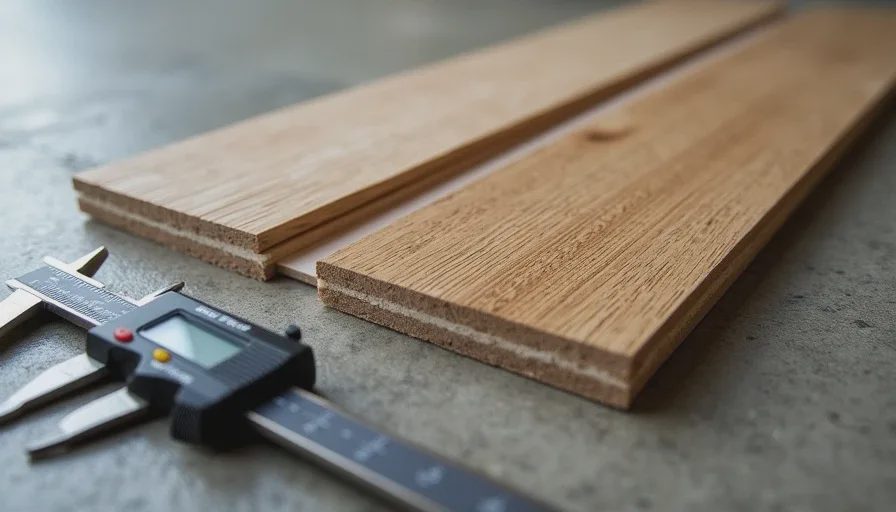
LVP wear layers are measured in mils. Twelve mil is common at the lower end; twenty mil is the threshold most installers consider suitable for active households with kids and pets. The SPC (stone-plastic composite) core adds rigidity and dimensional stability so the planks do not telegraph every subfloor imperfection. Waterproof claims on LVP are generally accurate for surface spills because the core itself does not absorb water. The weak point is always the seams: if water sits long enough to migrate under the click joints, you can still get mold or subfloor damage. Tight installation and a good underlayment matter more than the marketing word “waterproof.”
Engineered hardwood wear layers are measured in millimeters of real wood. A 2 mm layer can usually be refinished once; 3–4 mm can take two or three light sandings over its life. That is a real advantage if you want the floor to age in place for twenty years. The trade-off is that the wood surface remains susceptible to dents from dropped toys and scratches from pet nails. Janka hardness numbers help, but even a relatively hard oak will show wear in high-traffic paths long before a 20-mil LVP does.
VOC readings on the samples I tested stayed within CARB Phase 2 limits after the first week for both categories when the products carried FloorScore or equivalent certification. The LVP samples started slightly higher out of the box (typical of vinyl products) and dropped faster with ventilation. The engineered samples with hard-wax oil finished lower overall. None of them would have triggered a rejection in the old warehouse QC process I used to run, but I still ran the meter in the closed room because Mia crawls on these surfaces.
What I Actually Chose and Why
For the kitchen, mudroom, and play areas we went with a 20-mil SPC LVP. The one-hand mop test decided it. I can clean a spaghetti disaster while carrying a child and the floor returns to neutral. For the living room and bedrooms, where spills are less frequent and the desire for real wood underfoot is stronger, we are installing a 3 mm European oak engineered floor with a matte hard-wax oil finish. The color change risk is lower in those rooms, and the ability to refinish later has value.
Neither choice is perfect. The LVP will never feel as warm under bare feet as the wood. The wood will eventually show the path from the sofa to the kitchen. Both will outlast the cheap laminate I tested as a control, which swelled at the edges after the wine sat overnight.
The point of the test is not to declare a universal winner. It is to replace the brochure language with a single practical question: can you clean this floor the way you actually live? If the answer requires two free hands, a special cleaner, and perfect timing, it fails the household I live in.
That is the standard every flooring recommendation on this site will meet. Three months of real use, documented spills, and the one-hand rule. No exceptions.



No comments yet — be the first to share a thought.