When I shop for the best fake christmas tree, I strip the filter and look at what is underneath: the branch mix, the stand, the hinges, the wiring, and whether the whole thing still feels solid after setup and teardown. A tree can look full in a product photo and still shed plastic dust, lean toward the sofa, or arrive with lights that fail before New Year's Day. I care less about the showroom picture and more about whether it can survive a vacuum, a toddler, and a January storage run back into the attic. Stop staring at the price tag. Divide it by the years you'll use it. Now tell me it's expensive. A decent tree is a once-a-decade buy if you choose well, and that is where the real savings live.
What I check before I trust a tree
A good fake tree starts with materials. I want PE needles on the outer tips because they mimic real branches better and hold shape; PVC is fine as fill, but a tree made almost entirely of thin PVC tends to look flat and shiny. Next is the frame. Hinged branches are easier to set up, but only if the hardware feels tight and the sections lock without wobbling. I also check the stand before I even admire the branches. Metal beats lightweight plastic every time. If the tree has prelit lights, I want UL-listed wiring, enough slack at the plug, and a manufacturer that sells replacement bulbs or sections. If the box smells like a tire shop, I let it air out in the garage before it comes inside.
Where the price actually matters
If you want the best fake christmas tree without paying boutique money, the sweet spot is usually the middle of the market. Around $120 to $220 gets you a smaller unlit tree or a basic prelit model that looks fine in a guest room or apartment. In the $250 to $500 range, you usually start seeing better branch density, more realistic outer tips, steadier stands, and smarter light placement. Premium names like Balsam Hill and King of Christmas sit higher, often because of denser PE construction and fancier light systems, while National Tree Company, Puleo International, and many Home Depot or Lowe's house brands tend to live in the value lane. That does not make the cheaper tree bad. It just means you should know whether you are paying for realism, convenience, or packaging.
Prelit or unlit: the part that saves or steals time
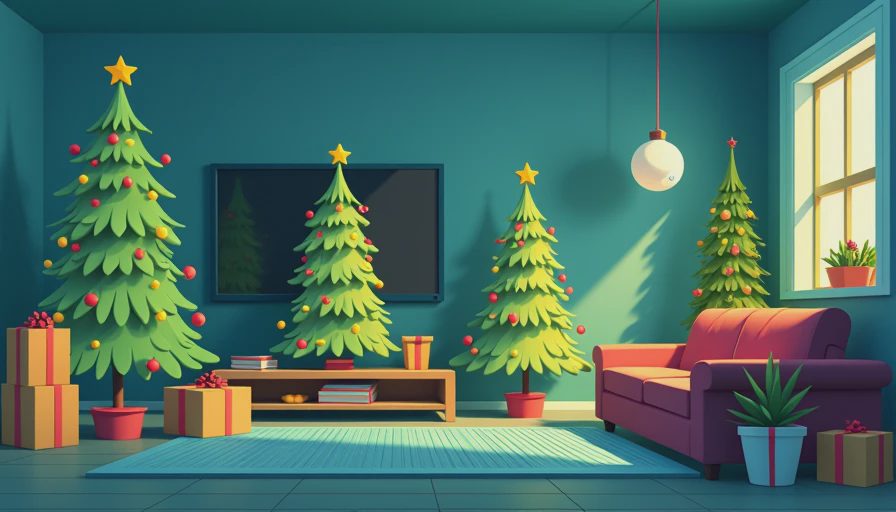
A lot of people want the best fake christmas tree in prelit form because nobody wants to untangle last year's lights at 8 p.m. with eggnog on the counter. I get it. Prelit is worth it when the lighting is even, the color temperature suits your room, and the cord runs cleanly to an outlet. I also like when the lights are standard enough that a failure does not mean trashing the whole tree. If you are the type who changes your style every year, unlit gives you more control and less risk. You can use warm white strands one season and a mixed look the next. The tradeoff is labor. Unlit means you own the setup, but it also means you are not stuck with dim LEDs you never loved.
Specs that separate a solid tree from a headache
The catalog language gets slippery fast, so I read the measurements the way I would read a sofa spec sheet. Height matters, but width matters just as much. A seven-and-a-half-foot tree that spreads to fifty-four inches can crowd a normal living room, while a narrower profile is easier for small houses and apartment corners. Tip count is not perfect science, but it does tell you whether the branches are dense enough to hide gaps. I also look for a decent warranty because light failures and hinge issues are where the budget trees stumble first. The storage box matters too. If the box is flimsy, the tree usually ages badly in the garage. A good bag or sturdy carton can buy you years of cleaner storage and fewer bent branches.

What I would buy for a family room with kids, pets, or tight corners
For a family room, the best fake christmas tree is the one that does not tip when a child leans on the lowest branch. That means a heavy stand, a shape that fits the room, and no weird little wire ends poking out where hands will find them. If you have pets, skip trees with brittle flocking that sheds all over the rug on day one. If your floor plan is tight, choose a slimmer profile and put it where traffic does not hit the corners every five minutes. I also think about ornament placement before I buy. The lower branches should be sturdy enough for soft ornaments and nothing breakable near the floor. The moment I think about Mia touching it, licking it, or running into it, I know whether the tree is right or not. That is the whole test.
My short answer on the best fake christmas tree
My short answer is simple: the best fake christmas tree for most homes is a midrange PE-heavy tree with a metal stand, UL-listed lights if you want prelit convenience, and a footprint that fits the room instead of taking over the corner. If your budget is tight, spend on sturdiness before you spend on extra lighting effects. If you buy once and use it for ten years, the math starts looking friendly fast. A $400 tree that stays straight and stores cleanly beats an $180 tree that sheds, wobbles, and gets replaced after two seasons. Strip the filter. Look at what's underneath. That is how you end up with a tree that looks good on Christmas Eve and still feels worth the money when you drag it back out next year.




No comments yet — be the first to share a thought.