A wool rug looks like an easy win: soft underfoot, naturally insulating, and considerably less disposable than a trendy polyester floor covering. But when I put a wool rug in the path of a three-year-old carrying yogurt, wooden blocks, and questionable confidence, the label stopped being enough. I tested construction, shedding, edge stability, spot cleaning, and odor over three months in my Austin house. Here is what held up, what did not, and where the price tag starts telling the truth.
My three-month test method
I placed the test rug in our main living area, not a polite spare room. Mia walked across it in socks, dragged a toy kitchen over it, and dropped food on it. David and I used the sofa daily, so the front edge received the same repeated foot traffic a family rug normally gets. I vacuumed with a standard upright twice weekly and measured the pile at the beginning and end with calipers.
I also checked the backing by lifting a corner and examining the joins. A dense, even weave matters more than a dramatic product description. Hand-knotted rugs can be beautiful and repairable, but they often cost hundreds or thousands more. Hand-tufted designs are usually less expensive, though the latex adhesive and fabric backing deserve closer inspection. Machine-made wool can still be useful; “machine-made” is not automatically a quality failure.
The smell test happened on day one and again after the rug sat in a warm, closed room. Wool itself has a noticeable animal-fiber scent, but a sharp chemical odor is a reason to pause. I do not treat “natural” as a magic safety certificate. If Mia might touch it, lick it, or rub her face against it, I want to know what is in the fiber, backing, dyes, and finishing treatments.
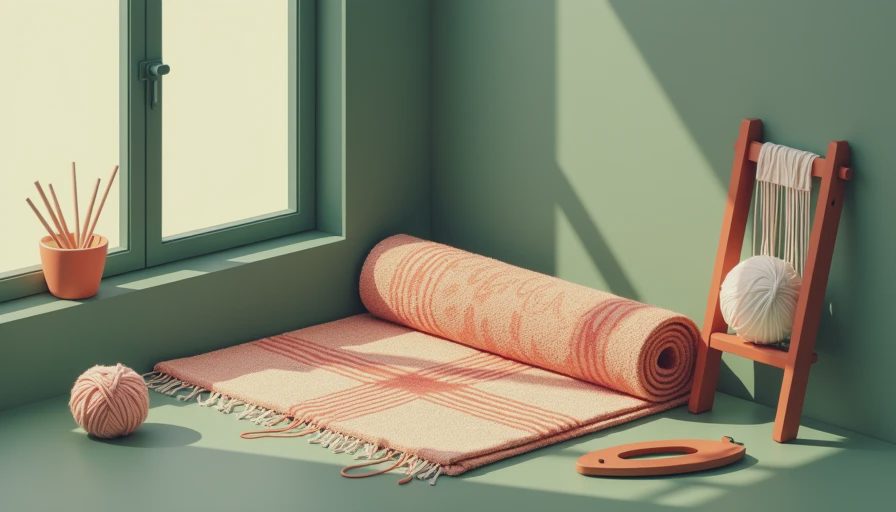
What makes a wool rug worth the money?
The best reason to buy a wool rug is performance over time. Wool fibers have natural resilience, so a quality pile can recover from furniture pressure better than many inexpensive synthetic piles. Wool also tends to hide small crumbs and traffic variation because the fiber has visual depth rather than a perfectly flat plastic shine.
That does not mean every wool rug deserves a premium price. A $300 machine-made option may be sensible for a playroom, while a $2,000 hand-knotted rug may make more sense in a living room you expect to use for 15 years. Divide the price by the years you will actually keep it. A $2,000 rug used for 15 years costs about $133 per year; replacing a $450 rug every three years costs $150 per year before disposal and shipping.
Look at density, not just thickness. A tall, loose pile can feel luxurious in a photograph but flatten quickly under a coffee table. A medium pile with tightly packed tufts was easier to vacuum and less likely to trap blocks, crumbs, and toy wheels. The backing should lie flat without ripples, and the edges should be finished cleanly enough that a toddler cannot pull a loose thread into a tempting string.
Shedding, cleaning, and the first month
Most new wool rugs shed some loose fibers. That is not the same as unraveling. During my first month, I used the vacuum’s normal floor setting and avoided aggressive brush agitation. The canister collected visible fuzz at first, then noticeably less by the fourth week. If a rug keeps producing handfuls of fiber after repeated gentle vacuuming, inspect the construction rather than assuming it needs more patience.
A wool rug should not be soaked casually. Wool can absorb water, and excessive moisture can encourage distortion, dye transfer, or a lingering odor. For a yogurt spill, I lifted solids with a spoon, blotted with cool water and a small amount of wool-safe detergent, then pressed the area dry with white towels. Rubbing spread the mark and roughened the surface, so I stopped doing it after the first test.
For larger accidents, professional cleaning is safer than saturating the rug in a bathtub. Ask whether the cleaner has experience with wool and whether the rug will be dried completely. A rug pad also helps here: it keeps the textile from sliding, reduces wrinkling, and creates a little separation from a damp floor.
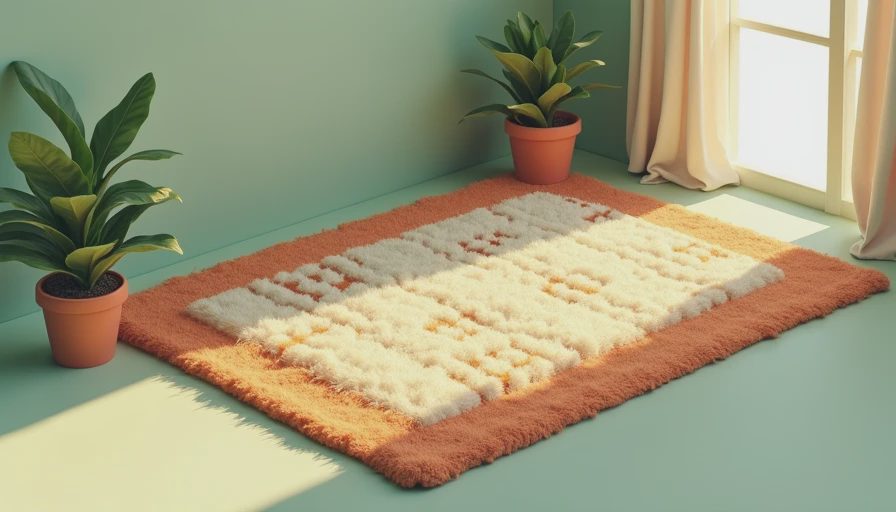
Backing, pad, and toddler safety
The rug itself is only half the floor system. I used a dense pad sized slightly smaller than the rug so the edges could sit flat instead of forming a raised lip. The pad should grip without leaving a sticky residue on the floor. Test a small hidden area first, particularly over finished wood, vinyl, or a newly installed surface.
Round corners and low profiles worked better in our high-traffic room. Mia tripped once over a curled corner during the first week, which was enough for me to treat edge behavior as a safety issue rather than a styling detail. Heavy furniture can hold a rug in place, but it should not be the only strategy in an open play area. A slipping textile can send a child, adult, or coffee table sideways in one second.
I also checked the care label for fiber content instead of trusting the product title. Some products marketed as wool rugs contain a wool blend, viscose, cotton, or synthetic backing. Blends are not automatically bad, but they change how the item sheds, cleans, and responds to moisture. The phrase “wool-feel” usually means you are not buying the material you think you are buying.
How to compare prices without getting fooled
A $200 wool rug and a $2,000 wool rug can both look attractive online because photography hides weight, backing, knots, and edge finishing. Ask for the total weight, pile height, fiber percentage, construction method, country of manufacture, and return policy. If those details are missing, the product page is selling an image rather than giving you a specification sheet.
Construction explains some price differences. Hand-knotting requires more labor and can support repair, while machine production can deliver consistent sizing at a lower cost. Natural variation in color is normal, but uneven borders, loose loops, and a strong adhesive smell are not features I would pay extra to acquire.
For a dining room, I would prioritize a low, dense pile that allows chairs to move without catching. For a bedroom, a softer higher pile can work because foot traffic is gentler. In a nursery or playroom, I would choose a washable, low-profile option only if its cleaning instructions are realistic. The most expensive textile in the house is not automatically the most practical one.
My buying checklist and final test
Before ordering, measure the room with painter’s tape on the floor. A common mistake is buying a rug too small for the sofa arrangement, then trying to solve the proportion problem with extra furniture. Check whether the front legs of the sofa can sit on the rug and whether doors will clear the pile. Add the rug pad, delivery, and possible professional cleaning to the real budget.
When the package arrives, photograph the rug before removing tags. Open it in a ventilated room, inspect both sides, and let it relax flat. Walk around the edges in socks. Run a clean white cloth lightly over the surface to check for loose dye, then vacuum gently according to the care instructions. If it smells harsh after ventilation or arrives with crooked seams, use the return window instead of convincing yourself that the problem is temporary.
After three months, my preferred wool rug was the one with a medium dense pile, stable backing, restrained shedding, and a pad that kept every edge flat. It was not the thickest or most photogenic option. It was the one that survived crumbs, toy traffic, and ordinary cleaning without requiring museum behavior. Strip the filter. Look at what is underneath. And apply the Mia test: if your child would lick the corner, pull the fringe, or run into the edge, the safest choice is the construction you can inspect, clean, and keep flat.





No comments yet — be the first to share a thought.