Before I recommend small laundry room decor, I run the Mia test: could a toddler pull it down, smear detergent on it, or crack her forehead on a sharp corner? Then I measure the room, inspect the materials, and live with the setup long enough to see what fails. A laundry room is not a staged photo. It is a warm, damp work zone where lint, drips, vibration, and overstuffed baskets expose cheap decisions quickly.
My own laundry room is in our 1998 Austin house, so I know the particular frustration of working around uneven walls, builder-grade shelving, and one outlet in the least convenient place. The goal is not to make a six-foot closet look like a boutique hotel. The goal is to make laundry easier while using finishes that tolerate real hands and real mess.
Start with the measurements, not the mood board
The best small laundry room decor begins with a tape measure. Record the width and depth of the washer and dryer, the door swing, the location of water shutoffs, the vent, outlets, and any baseboards that steal an inch. Leave enough clearance to remove the machines for service. A pretty cabinet that blocks the dryer vent is not a design win; it is an expensive future headache.
For a stacked unit, I like a shallow shelf around 10 to 12 inches deep. That is enough for stain spray, wool dryer balls, and a small folding surface without creating a head-banging obstacle. For side-by-side machines, a counter above the pair can add useful folding space, but it should be removable or supported independently if the appliances need to slide out.
Use vertical space carefully. A wall cabinet or open shelf above shoulder height can hold backup detergent, while everyday supplies belong lower and closer to the front. If children can reach the products, use a latched cabinet rather than relying on a decorative tray. Mia would absolutely treat a colorful detergent bottle as a science experiment.

Choose materials that can handle water and detergent
Small laundry room decor often fails because the materials were selected for appearance rather than exposure. MDF with an unsealed edge can swell after one slow hose leak. Unprotected wood shelves can show detergent rings within weeks. Peel-and-stick wallpaper can lift near a dryer if the wall gets warm and humid.
For counters, compact laminate is usually the practical choice. It is available in convincing stone and wood patterns, wipes clean, and commonly costs less than natural stone. A remnant quartz top is tougher and more polished, but the fabrication and installation can push a small project into the $700 to $1,500 range. Stop staring at the price tag. Divide it by the years you will use it. A counter that stays flat for ten years can be cheaper than replacing a swollen shelf twice.
For storage, look for sealed plywood or metal with powder-coated surfaces. Check the underside and the cut edges, not just the product photo. I also prefer rounded shelf fronts over exposed metal corners when the walkway is narrow. If a basket sits at hip height, its handles should not stick out far enough to catch clothing or a passing child.
Paint matters too. A washable satin or semi-gloss finish is more forgiving than flat paint behind a utility sink. I would rather see a small patch of practical white than a trendy color that cannot survive a detergent splash. Test a sample by wiping it repeatedly with a damp microfiber cloth before committing.
Make lighting useful instead of decorative
A single ceiling fixture creates shadows exactly where you need to read care labels. Good small laundry room decor uses layered light: a bright overhead fixture for general visibility and an under-cabinet or wall-mounted light over the folding area. Choose a color temperature around 3000K to 4000K so white fabrics do not look gray or oddly blue.
Safety comes first in a room with water. Use fixtures rated for the location and have electrical work handled by a qualified professional when wiring, outlets, or switches need changes. Do not drape a cord across the washer, and do not place a plug-in lamp beside a sink simply because it looks charming in a photograph.
A motion-sensor light can be useful when carrying a full basket, especially if the laundry room sits in a hallway. Select one with a manual override, because a light that switches off while you are sorting socks becomes annoying fast. I also like a small night-light with a warm glow, but it belongs out of toddler reach and should not block a ventilation opening.
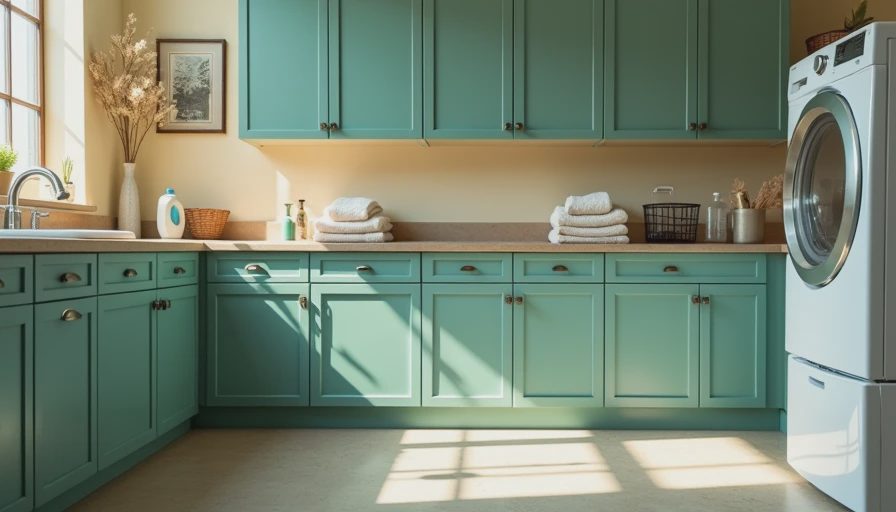
Build storage around the actual laundry routine
The smartest small laundry room decor follows the sequence of your work. Dirty clothes arrive first, detergent is added second, garments are moved or folded third, and clean clothes leave last. Put a divided hamper near the entrance, detergent near the washer, and a folding shelf where you can stand without blocking the door. This sounds obvious, yet many rooms put the hamper behind the open door and the folding surface above a machine that shakes during the spin cycle.
A narrow rolling cart can fill a gap between machines and a wall, but measure the gap at floor level. Baseboards, hoses, and uneven flooring reduce usable width. Choose locking casters and a handle that does not become a climbing rail. For smaller supplies, clear bins are useful because you can see what is inside without opening every cabinet. Avoid putting loose pods in a low bin; a closed, latched container is the safer choice.
If you install hooks, anchor them into a stud or use hardware rated for the load. One hook for an empty mesh bag is different from one holding a wet denim jacket. I would rather have two properly anchored hooks than six decorative ones screwed into drywall.
Add personality without adding fragile clutter
This is where small laundry room decor can feel personal without becoming a dust trap. Use one framed print behind glass or a washable textile that can be removed for cleaning. A slim wood rail for clothespins, a durable runner with a low profile, or a painted cabinet interior can add character without taking up working space.
Skip glass jars full of powdered products, unsecured leaning art, and baskets with rough splinters. In a tight room, every object needs a job. A lidded bin can hide cleaning rags; a magnetic clip can hold a stain-treatment card; a simple wall clock can prevent a forgotten load from sitting damp overnight. These are better choices than five small accessories competing for a shelf.
For flooring, prioritize slip resistance and easy cleanup. Porcelain tile is durable, but grout still needs attention. Sheet vinyl can be comfortable underfoot and has fewer seams, though installation quality matters around edges. Whatever you choose, keep a small absorbent mat in front of the machines and inspect the floor underneath it regularly. A mat that stays wet is not protecting the floor; it is hiding a problem.
My practical setup for a narrow room
If I were starting today, I would install a bright ceiling fixture, paint the walls in washable satin, and add one 12-inch-deep shelf above the machines. I would use a sealed counter only if the appliances were side by side and service access remained clear. A latched cabinet would hold detergent, an anchored hook would handle the drying bag, and a slim washable mat would cover the standing area.
That setup keeps the room visually calm because the useful items have designated homes. It also costs less than filling every wall with custom cabinetry. A basic shelf system can be under $200, while a custom build can reach $1,500 or more before electrical changes. Spend the difference on sound mounting, sealed edges, and a counter that will not warp.
The finished room should feel easy to reset after a busy week. If you cannot wipe the surface, reach the shutoff, or remove a basket without moving three other things, the layout needs work. Good small laundry room decor is not decoration piled onto a utility room. It is a tested system that makes a repetitive chore safer, faster, and less irritating for the people who actually use it.





No comments yet — be the first to share a thought.