Home improvement usually starts with a pretty picture and ends with a delivery box, a contractor invoice, or a toddler finding the one sharp corner you missed. I approach home improvement differently: test the material, inspect the construction, and ask whether Mia would lick it, touch it, climb on it, or run into it. A finish can look beautiful under a showroom spotlight and still fail the first grape juice spill.
After years in furniture purchasing and three months of product testing in my 1998 Austin house, I have learned that the label tells you very little. “Performance fabric” does not explain the abrasion rating. “Waterproof flooring” does not tell you whether water can reach the subfloor through a loose seam. Strip the filter. Look at what is underneath.
Start with the problem, not the product
Good home improvement begins with a room problem stated in plain language. The kitchen floor needs to survive dropped utensils, muddy shoes, and standing water near the dishwasher. The living room sofa needs to handle crumbs, climbing, and someone sitting on the arm despite repeated reminders. A bedroom window needs better temperature control, not merely a black frame for photographs.
Write down the abuse a surface will receive before opening a shopping tab. I use four questions: What gets wet? What gets scratched? What gets touched frequently? What happens if a child falls against it? This prevents an expensive mismatch, such as installing delicate limestone in a busy entryway or choosing a boucle chair that collects every snack crumb.
Then define the maintenance limit. If you will not reseal a countertop every year, do not choose one that depends on annual sealing. If wiping a wall with a damp microfiber cloth is the entire cleaning plan, select a washable paint with a suitable sheen. Home improvement works when the care schedule fits the actual household, not an imaginary version of it.
Read the spec sheet before the marketing copy
The most useful details often sit below the product photographs. For flooring, look for wear-layer thickness, installation method, water-resistance language, and the warranty exclusions. For upholstery, check the cleaning code, fiber content, seam construction, and whether the cushion cover can be removed. For windows, compare U-factor, solar heat gain coefficient, air leakage, and frame material rather than stopping at “energy efficient.”
These numbers are not decorative. A lower U-factor generally indicates better resistance to heat transfer, while solar heat gain coefficient helps describe how much solar heat enters through the glass. In an Austin room with strong afternoon sun, that distinction matters. A window can be attractive and still make the sofa beside it painfully hot.
I also look for what the sheet avoids saying. If a manufacturer claims stain resistance but gives no cleaning code, ask why. If a rug lists a fiber name but omits backing materials, check whether the backing sheds odor or curls at the edges. If a cabinet advertises solid wood but specifies particleboard for the box, understand exactly where the expensive material is being used.

The safety pass comes before the styling pass
When Mia enters a room, my test method changes. I get down to her eye level and inspect corners, cords, gaps, tipping risk, loose hardware, and anything she could put in her mouth. A tall dresser needs secure anchoring, even if the manufacturer calls it stable. A freestanding mirror needs more than a heavy base if a child can pull on its edge. A pendant light needs properly installed strain relief and hardware, not just a pretty canopy.
For furniture, look underneath. Thin staples, uneven dust covers, exposed screws, and sharply cut metal brackets are clues about construction quality. Run a hand along every accessible edge. Press the joints. Open drawers repeatedly. A drawer that binds empty will become worse when loaded with toys. The Mia test is not a substitute for professional installation or local code requirements, but it catches plenty of hazards before they become a repair bill.
For finishes, ask about indoor-air quality documentation instead of trusting a low-odor claim. Low odor does not automatically mean low emissions. Products certified under recognized indoor-air programs can offer more useful information, but ventilation still matters during installation. I would rather open windows and wait than let a child sleep beside freshly applied flooring adhesive.
Budget by years, not by checkout total
A $3,000 sofa sounds expensive beside an $800 sofa until the cheaper one sags in year three. Divide the purchase price by the years you realistically expect to use it. The first sofa costs about $1,000 per year over three years. The second costs $200 per year over fifteen years. That math does not guarantee the costly option is better, but it forces a useful question: where did the money go?
Look for durable value in replaceable or repairable parts. A sofa with reversible cushions and available replacement covers can outlast one with permanently attached foam. A faucet with standard cartridge parts is easier to repair than an obscure model that requires replacing the entire fixture. Flooring with a damaged plank that can be removed individually is more practical than a surface that requires tearing out half the room.
Home improvement budgets also need an installation line. Add delivery, demolition, underlayment, trim, disposal, permits where applicable, and the cost of correcting a bad measurement. A $1,200 floor can become a $2,000 project after subfloor repair and transitions. I prefer a clear $2,000 estimate to a suspiciously cheap quote that leaves the difficult parts out.
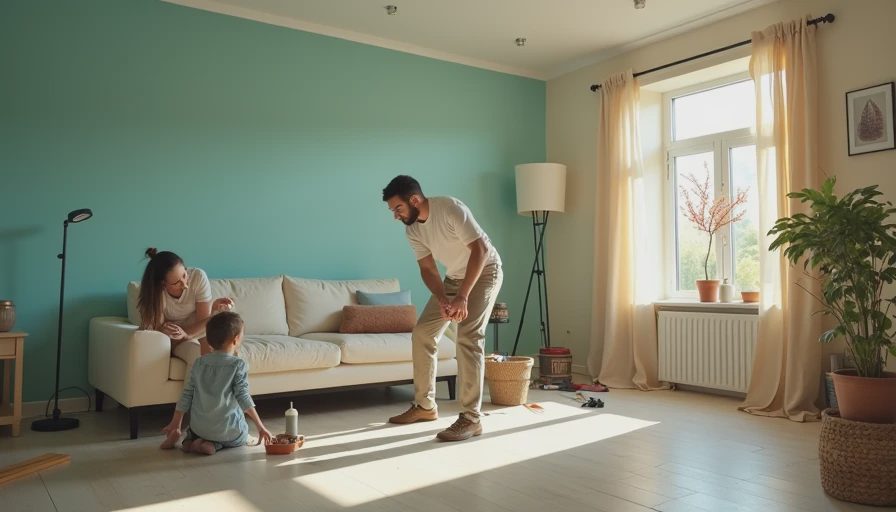
Test samples in the room where they will live
Never judge a paint color, flooring tone, tile, or fabric from a phone screen. Bring home a sample and observe it in morning, afternoon, and evening light. Put it beside the trim, countertop, and furniture that will remain. In my house, a warm white looked neutral at the store and noticeably yellow beside the existing oak after sunset.
Samples also allow physical testing. Spill a measured tablespoon of coffee or tomato sauce on a flooring offcut, wait the stated amount of time, and clean it using the recommended method. Drag a toy car across a finish. Press a damp cloth against the wall. Sit on a cushion with the same posture your family uses every night. These are not laboratory tests, but they reveal whether the product suits your life.
For flooring, inspect transitions between sample pieces. Click-lock edges should meet without dramatic height differences. For tile, look at the underside and edge finish. For rugs, bend the corner and check whether the backing cracks or releases a strong chemical smell. Home improvement purchases become much safer when the sample gets treated like a suspect, not a precious object.
A practical shopping checklist
Before ordering, I save the product page and record the exact model, dimensions, finish, warranty, care instructions, and return policy. I measure the doorway, stair turns, elevator, and final placement area. For heavy furniture, I check the floor protection and anchoring plan before delivery day. For lighting or plumbing, I confirm compatibility with the existing box, supply lines, shutoff valves, and hardware.
I also calculate the cost of failure. A $70 light fixture that is wrong for the ceiling box creates inconvenience. A refrigerator that cannot clear the hallway can create a return fee, restocking charge, and several weeks without the appliance. A floor that fails around a toilet or dishwasher can damage materials underneath. The cheapest item is not always the cheapest decision.
Home improvement should leave you with fewer surprises, not a prettier version of the same problem. Ask for missing specifications, read exclusions, and take photographs before installation. If structural, electrical, gas, or major plumbing work is involved, use a qualified professional rather than treating a tutorial as a substitute for training.
What I would buy with my own money
I favor products with boring, verifiable strengths: washable finishes, repairable hardware, clear dimensions, credible test documentation, and parts that can be replaced. I am less interested in a viral label than in a three-month result. Did the chair keep its shape? Did the floor survive wet shoes? Did the cabinet door remain aligned after hundreds of openings? Did Mia find a way to make the product unsafe?
That is the useful standard for home improvement. Choose the material for the mess it will meet, the construction for the years it must serve, and the installation for the risks involved. Stop staring at the price tag. Divide it by the years you will use it. Then decide whether the product earns its place in your house.


No comments yet — be the first to share a thought.