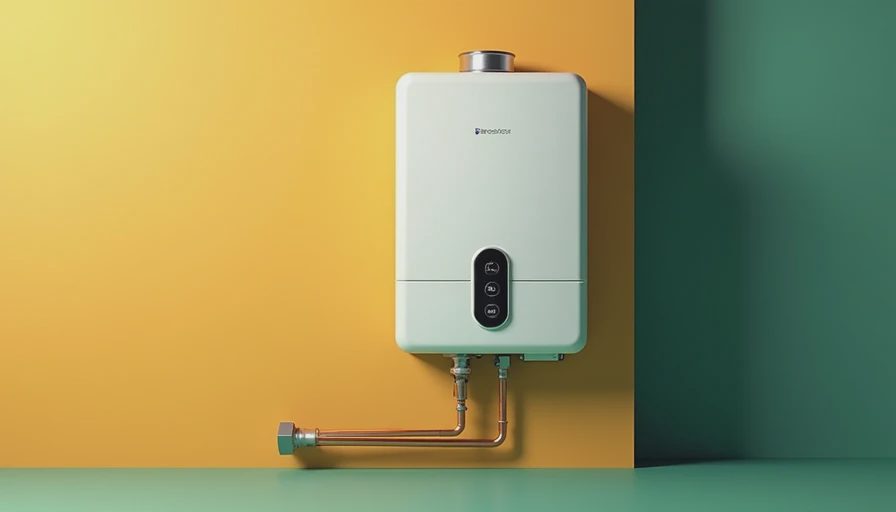
The pros and cons of a tankless hot water heater are not something you can judge from a spec sheet. I installed a 199,000 BTU natural gas Rinnai unit in my 1998 Austin house, used it daily for three months, and tracked everything from gas bills to shower lag. Here's what the reality looks like for a family with a toddler.
The Test Setup
My old 50-gallon electric tank was on its last legs and had already flooded the garage once. I chose a condensing natural gas tankless because it's the most common upgrade path for homes with an existing gas line. The plumber spent a full day running new 3/4-inch gas pipe and a dedicated vent. Total install came to $1,300 including the unit, which cost $1,100. I tested for 90 days with normal family use: two showers, dishwasher runs, and a toddler's bath.
The Pros: What I Loved
Endless hot water is the headline, and it's real. I ran the washer, dishwasher, and two showers back to back without losing temperature. With the old tank, the second shower always got lukewarm. Now there's no tank, so there's no recovery wait.
Energy savings showed up fast. My gas bill averaged about $18 less per month in winter and $9 less in summer. The unit heats water only when you need it, so it isn't keeping 50 gallons hot around the clock. And I gained back a corner of the garage where the tank used to sit. That space turned into bike storage.
The flood risk disappears. A tankless unit doesn't hold water, so it cannot rupture and dump 50 gallons on your floor. After the mess my old tank made, that alone is worth the upgrade price.

The Cons: What Gave Me Pause
The big con is the upfront price. Coincidentally, my setup cost $2,400, including labor, while a standard 50-gallon tank replacement runs about $1,300. That gap is a lot for a family to swallow, even with the savings down the road.
Then there's the lag. With a tank, hot water sits right there. With tankless, it has to travel from the heat exchanger. In my master bathroom, that meant waiting about six seconds. It's minor, but you notice it on cold mornings.
Flow rate also matters. A tankless unit delivers a fixed number of gallons per minute. Mine handles 7.5 gallons, so a shower plus dishwasher is fine, but adding a second shower pushes it to the limit. You can't have unlimited water and unlimited simultaneous outlets unless you buy a bigger unit.
Hard-water homes need an annual flush to keep the heat exchanger from scaling. I did it myself with a pump and two gallons of vinegar, but it took an afternoon. If you pay a plumber, budget $100 to $200 a year.
The Real Cost Per Year
Here's where the pros and cons of a tankless hot water heater get interesting. Upfront, tankless loses: about $2,400 vs $1,300 for a standard tank. But divide by lifespan. A tank lasts 10 to 12 years. A tankless is built for 20. That works out to $120 per year for the tank and $120 per year for the tankless, before energy.
Now add energy savings. We save roughly $150 to $200 a year in gas. Over 20 years, that's $3,000 to $4,000. Suddenly the tankless is cheaper overall, even with the higher installation cost. Some utilities also offer rebates of $100 to $300, which shortens payback further.
Should You Buy One?
Buy it if you plan to stay in your home for more than 10 years and want to stop worrying about leaks. Skip it if you're selling soon, have a whole-house recirculation obsession, or live where water pressure is weak. A tankless unit doesn't store water, so it won't help with pressure issues. But if you've got a gas line and a couple thousand dollars to invest, the payback is real. In my three months, the only thing I'd change is adding a recirculation pump to cut the wait time. That's another $200 to $400, but for a big house it's worth it.
One Thing Nobody Tells You
Maintenance isn't just about flushing. The venting system for a high-efficiency tankless is different from a standard tank. The PVC vent has to be sloped correctly and sealed properly, or condensation can drip back into the unit and corrode the heat exchanger. My plumber pointed this out during install, and it's the kind of detail that matters in a humid climate like Austin.
Also, if you lose power, an electric-ignition tankless won't light, while an old gas tank model with a pilot light might still work. In a Texas winter storm, that's a real difference. If blackouts are common for you, factor in a backup plan or choose a model with battery ignition.
My Bottom Line
After three months, my verdict on the pros and cons of a tankless hot water heater lands on the side of buy. The endless hot water, lower gas bills, and the end of flood anxiety outweigh the upfront cost and the shower lag. It's not the cheapest option on paper, but over 20 years it wins. And Mia can't touch it, spill in it, or break it. That's the kind of durable home upgrade I can recommend.




No comments yet — be the first to share a thought.