Interior decorating ideas are easy to love in a photo and much harder to live with when shoes pile up by the door, sunlight hits the sofa at 4 p.m., and someone drops a water bottle on the rug before breakfast. I start the same way I do with furniture: what gets touched, bumped, stained, or ignored every day? Strip the filter. Look at what's underneath. In a real house, the first decisions are usually layout, lighting, rug size, and paint sheen, not throw pillows. If the bones are right, even plain pieces read as intentional. If the bones are wrong, the room keeps feeling off no matter how many candles, baskets, or framed prints you add. The goal is not a magazine spread. The goal is a room that can take real traffic and still look calm at night.
Start with the room's job
Good interior decorating ideas begin with a function map: where people sit, where drinks land, where cords hide, and where the eye lands first. In a living room, that means measuring the main path so nobody has to side-step a coffee table. In a bedroom, it means leaving enough room to open drawers without bumping the bed. In a dining nook, it means choosing chairs that tuck in fully, not ones that chew up the walkway. A tape measure beats a cart full of pretty things every time. I like to mark floor plans with painter's tape before I buy anything bigger than a lamp. If the room is awkward, solve the path first and decorate second. That's how a cramped space starts feeling larger without knocking down a wall.
A rug should usually be large enough that the front legs of the sofa and chairs sit on it, because tiny rugs make furniture look like it is floating apart. If you are renting or on a budget, even moving a sofa twelve inches and pulling art lower can make the whole room feel more grounded. That is why layout is the cheapest upgrade with the biggest payoff.
Choose a palette that survives fingerprints
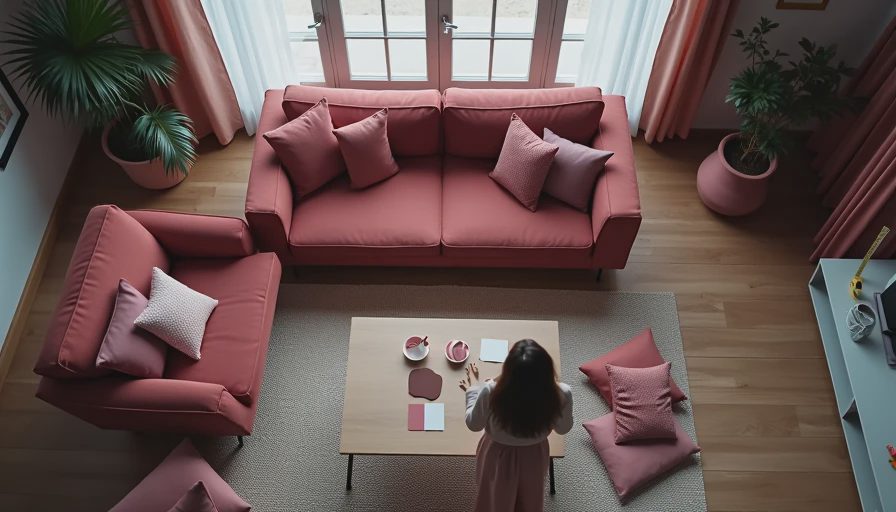
The smartest interior decorating ideas usually limit the palette to one main neutral, one wood tone, and one accent color that can repeat three or four times. That repetition keeps the room from looking accidental. Paint samples should be tested in morning light and at night under the bulbs you actually use, because beige can turn pink, green, or gray depending on the room. Benjamin Moore and Sherwin-Williams both have good midrange paints that land roughly in the $50 to $90 per gallon range, and the sheen matters just as much as the color. Eggshell hides more than satin. Satin cleans easier in kitchens, hallways, and kids' rooms. If you want the room to feel expensive, repeat finishes on purpose: warm brass with warm woods, black accents with darker frames, chrome with cooler palettes. Don't scatter five different metal tones and call it collected.
White trim can sharpen a room, but ultra-bright white next to creamy walls can look harsh. Match undertones first, then decide how crisp you want the trim to feel. One good sample board held against the floor, the sofa, and the curtains will tell you more than a dozen screenshots.
Layer lighting before you buy decor
Some interior decorating ideas matter only after the lighting is right, and this is where most rooms fall apart. One overhead fixture is not enough unless the room is tiny. You want ambient light for the whole space, task light for reading or cooking, and accent light to pull attention to art, a shelf, or a plant. Table lamps, floor lamps, and a simple picture light often do more for mood than another decorative object. I like 2700K bulbs for living spaces because they feel warm without going yellow, and I avoid mixing daylight bulbs with soft white in the same room unless I have a reason. A room with good lighting makes thrifted furniture look better, cheap art look more expensive, and corners feel finished. That is a better return than buying another tray.
The same logic applies to curtains and mirrors. Hang drapes higher than the window frame if you want the room to feel taller, and use mirrors where they bounce useful light instead of glare. If a lamp shade is too small, the whole room can look underscaled. If it is too large, the space starts to feel top-heavy. Small changes, big visual consequences.

Spend on what gets touched the most
Spend on the pieces that get touched the most. A sofa, dining chairs, a rug, and window coverings work harder than a stack of coffee-table books ever will. Stop staring at the price tag. Divide it by the years you'll use it. Now tell me it's expensive. A $1,500 sofa that holds shape for ten years costs less per year than an $800 one that sags before the second kid starts school. The same logic holds for rugs and shades: if they cover a lot of square footage, a slightly better weave, better lining, or a sturdier backing pays off fast. This is also where brands like Crate & Barrel, Room & Board, West Elm, IKEA, and Target land in different lanes. Some are better for frames, some for quick fills, some for budget basics. The trick is knowing which category you are buying, not assuming a logo equals quality.
If you want the room to feel finished without draining the account, buy the biggest durable item you can reasonably keep for years, then save on pieces that are easy to swap. That usually means frames, vases, and pillows can flex while the sofa and rug stay put. The room reads polished because the expensive-looking decisions are doing the heavy lifting.
Finish with pieces that can take real life
If you're choosing between a full refresh and a partial one, interior decorating ideas work best when you follow a sequence instead of shopping randomly. Start with paint or a wall color fix, then choose the biggest rug you can fit, then lighting, then curtains, then art, then the small stuff. A room rarely needs fifteen accessories; it needs three or four objects with enough scale to hold the wall. For a fast reset, I would rather see one oversized mirror, one real plant, and two matching lamps than a shelf crowded with tiny decor. That mix is cleaner to maintain and easier to change out later. If you are updating on a tight budget, spend the most money where your hand lands first and your eye lands second. That is usually hardware, lamps, and textiles. The rest can come from estate sales, HomeGoods, or pieces you already own once they are styled with some restraint.
Keep breakables above toddler height, choose closed storage for the clutter magnets, and pick finishes you can wipe in under a minute. What Mia would do to it: she would tug the curtain hem, test every low shelf, and leave a crayon mark on the nearest light switch, which is exactly why the sturdy, simple version wins.




No comments yet — be the first to share a thought.