Full vs Queen is not a fluffy decorating question. It is a measurement problem involving floor space, sleep habits, stairwells, sheets, and the small human who will eventually use the bed as a trampoline. A full mattress measures about 54 by 75 inches. A queen measures about 60 by 80 inches. Those extra 6 inches of width and 5 inches of length sound modest on paper, but they change how a room functions every morning.
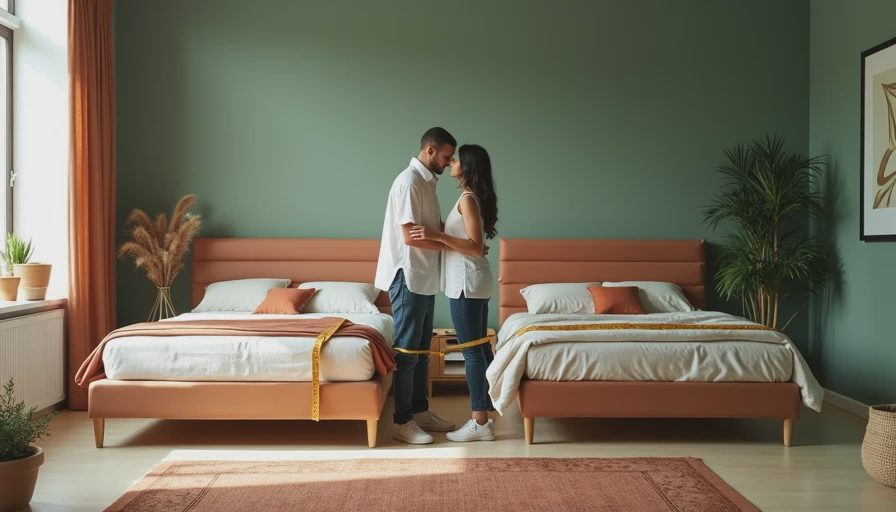
I measured both layouts in our 1998 Austin house before replacing the guest bed, then marked each mattress footprint with painter's tape. That simple test exposed what showroom photos hide: the queen used 30 more square feet of floor area, while the full left a much easier walking path around a dresser. Strip the filter. Look at what's underneath.
Full vs Queen dimensions and sleeping space
The full is usually the better fit for one adult, a teenager, or a guest room that also needs to hold a desk. At 54 inches wide, it gives one sleeper plenty of room to stretch without swallowing the entire room. Its 75-inch length is the catch. Anyone around 6 feet tall can end up with heels or ankles near the edge, especially after adding a thick pillow.
The queen is 60 inches wide and 80 inches long, which is why it has become the default adult mattress size. Two adults each get roughly 30 inches of width, although that is still noticeably tighter than a king. The additional length also helps taller sleepers and creates more usable space for a child who occasionally climbs in after a nightmare.
For perspective, a 10-by-10-foot bedroom gives you 100 square feet before furniture. A full mattress takes about 28 square feet, while a queen takes about 33.3 square feet. The frame, headboard, nightstands, and clearance add much more. A queen can fit, but “fits” and “leaves room to open the closet” are different engineering terms.

Which size works for couples, children, and guests?
When I compare Full vs Queen for a primary bedroom, the queen wins almost every time. Two adults can sleep on it without constantly negotiating the center line. If one person is a restless sleeper, owns a large dog, or needs room for a pregnancy pillow, the full becomes a daily compromise rather than a bargain.
For a child, the full can be a smart long-term choice. It gives a growing teenager more space than a twin and can accommodate a parent during bedtime without requiring a second bed. I would still avoid pushing a full directly against a window or radiator, and I would anchor any tall bookcase nearby. Mia would absolutely use a low bed as a launch pad, so I care about a sturdy frame, rounded corners, and a mattress height that keeps falls manageable.
A guest room is where the decision gets interesting. Choose a full if most visitors stay alone and the room doubles as an office. Choose a queen if couples visit regularly or you want the room to feel less like a converted storage area. A queen with a slim platform frame can work better than a full with a bulky sleigh bed.
Room layout, frames, and the clearance people forget
Do not measure only the mattress. A standard queen frame can add 3 to 8 inches to each dimension, and upholstered headboards can add even more. Some storage beds extend 12 inches beyond the mattress at the foot. That can turn a comfortable 24-inch walkway into a shin-catching 12-inch gap.
For Full vs Queen planning, place masking tape on the floor at the exact outside dimensions of the frame, not just the mattress. Open the closet, swing the bedroom door, pull out drawers, and walk around the taped outline while carrying a laundry basket. I use a 24-inch clear walkway as a practical minimum in tight bedrooms; 30 to 36 inches feels much better around the foot and sides.
Also measure the route into the room. Mattresses bend, but solid platform frames do not. Check stair turns, elevator dimensions, hallway corners, and the narrowest door opening. A queen mattress is easy to order and surprisingly annoying to maneuver through a 1920s bungalow. If the frame arrives in pieces, that problem is smaller, but the headboard may still be the limiting part.
Full vs Queen cost, bedding, and replacement math
A full mattress commonly costs less than a comparable queen, often by $50 to $200 depending on construction. Full sheets are also usually cheaper, and a full bed frame can save another $50 to $150. Those savings matter when you are furnishing a first apartment or buying several beds at once.
But do not stop at the mattress price. Queen bedding is widely available at Target, Costco, IKEA, Saatva, and local stores, with more options in cotton percale, linen, and washable waterproof protectors. Full bedding is common too, but some boutique brands offer fewer patterns or charge nearly the same price as queen sheets. Replacement convenience has a dollar value when a toddler dumps yogurt on the fitted sheet at 7:10 a.m.
My cost-per-year rule helps here. If a $900 queen lasts 10 years, that is $90 per year before sheets and foundation costs. A $700 full is not automatically cheaper if you move in three years, add a partner, or replace it early because the sleeping surface feels cramped. Stop staring at the price tag. Divide it by the years you'll use it.
What changes with mattress thickness and foundation height?
Mattress size is only half the comfort equation. A 12-inch hybrid on a tall foundation may place the top of the mattress 30 inches above the floor. That can feel fine for an adult, but it is a serious drop for a preschooler climbing down in the dark. A lower platform frame can reduce the fall height, though it may eliminate under-bed storage.
With Full vs Queen, pay attention to center support. Queen frames span a wider area and need a properly supported center rail, especially with heavier hybrid mattresses. A cheap metal frame that flexes in the middle can create squeaks, uneven wear, and a mattress warranty problem. Look for a frame rated for the combined weight of sleepers, mattress, and bedding, not just a vague “heavy duty” label.
I also prefer washable, zippered mattress protectors with a waterproof membrane and no strong chemical odor. Let the protector air out before installing it, and inspect seams for loose threads. The mattress itself should arrive with clear material and warranty information rather than a fog of wellness language.
The practical answer for your bedroom
Choose a full if one person will sleep there, the room is under roughly 100 square feet, or you need space for a desk, dresser, or play area. It is especially sensible for a teenager who wants an upgrade from a twin without filling the room with bed.
Choose a queen if two adults will share the bed, anyone is tall, or this is your main bedroom for the next five to ten years. The extra width and length are not decorative upgrades; they are usable sleep surface. Full vs Queen becomes an easy call when you tape both footprints on the floor and test the furniture around them.
My final check is brutally domestic: can a child walk past the bed without catching a shoulder on the frame, can you change sheets without moving a dresser, and can everyone sleep without hanging over the edge? If yes, buy the size that fits those answers, not the one that looks largest in a staged photograph.




No comments yet — be the first to share a thought.